When this countdown ends, the price rises by $0.50 - up to $17.
Finally: A Step-by-Step “Claude Skill” That Takes You From a Vague Story Idea to a Complete Magitech Novel Manuscript - Even If You Have Never Written a Single Page in Your Life
No writing degree. No plot formulas to memorize. No staring at a blank page for six months. Just 11 guided stages, enforced one gate at a time, with Claude doing the heavy lifting while you stay the author.

Price rises $0.50 every hour until $17 • Instant access
From the desk of the Magitech Novel Forge team
Dear Aspiring Author,
Let me guess how you got here.
Somewhere in your head, there is a world. Maybe it is a floating city powered by crystallized memories. Maybe it is a kingdom where spells are compiled like code, or a rusted war machine that only wakes when a child hums a forgotten song. You can see it. You can almost hear it.
And yet, every time you sit down to turn it into a real book, something breaks.
You open a blank document. The cursor blinks. You type a sentence, delete it, and type another. Twenty minutes later you are researching “how to outline a novel” on YouTube, and an hour after that you are deep inside a rabbit hole about the “Save the Cat” beat sheet, the “Hero’s Journey,” and something called a “three-act structure” that nobody ever explained to you in plain English.
By midnight you have no pages. You have a browser with 37 tabs open, a nagging feeling that real writers know something you don’t, and a quiet voice whispering, “Maybe this just isn’t for me.”
If that sounds painfully familiar, please read every word of this page. Because that voice is wrong. And in the next few minutes I am going to show you why.

The Dirty Little Secret About “Writer’s Block”
Here is what nobody tells beginners: you are not blocked because you lack talent. You are blocked because you lack a system.
Professional novelists do not wake up and magically pour out 80,000 words. They work in layers. First the idea is tested. Then the characters are built. Then the world gets rules. Then the plot is mapped, the chapters are planned, the scenes are drafted, and finally the whole thing is torn apart and repaired.
That is the real process. It is not mystical. It is engineering. And almost nobody teaches it to beginners, because experienced writers forgot what it felt like not to know.
So the beginner does the only thing they can: they start at Chapter One with no map, write 3,000 enthusiastic words, hit a wall, and quietly abandon the project. Then they feel guilty about it for years.
Sound harsh? It is also incredibly common. Millions of half-finished manuscripts are sitting in folders right now, not because their authors were untalented, but because nobody handed them a clear path from A to Z.
“But Can’t I Just Ask an AI to Write My Novel?”
Good question. You have probably tried it already.
You typed something like, “Write me a fantasy novel about magical technology.” And what came back was… fine. Technically readable. But also strangely hollow.
The hero had no real flaw. The villain wanted “power” for no particular reason. The magic could do whatever the plot needed at any moment. Chapter 7 contradicted Chapter 2. A sword you were told was destroyed suddenly reappeared in someone’s hand. And after about 1,500 words the whole thing simply stopped, as if the AI had run out of breath.
That is not because AI is useless. It is because a single vague prompt is the worst way to use it. Asking an AI to “write a novel” is like asking a contractor to “build a house” without blueprints, a budget, or a plot of land.
Here are the five most common ways beginners get burned when they use AI for fiction:
- The Wandering Plot: No structure, so the story drifts until it dies.
- Cardboard Characters: Everyone sounds the same and wants the same shallow things.
- Convenient Magic: Powers appear exactly when needed, with no cost and no limits. Readers smell it instantly.
- Memory Loss: Start a new chat and the AI forgets your hero’s eye color, her secrets, and the war you spent three hours designing.
- Outline Only: You get a lovely bullet list of ideas and never a single finished chapter.
If you have been burned by any of these, it was not your fault. The tool was never given a process. And that is exactly the gap I set out to close.
Introducing: Magitech Novel Forge
The complete beginner-to-novel Claude Skill that turns Claude into your patient, structured, always-prepared co-author.
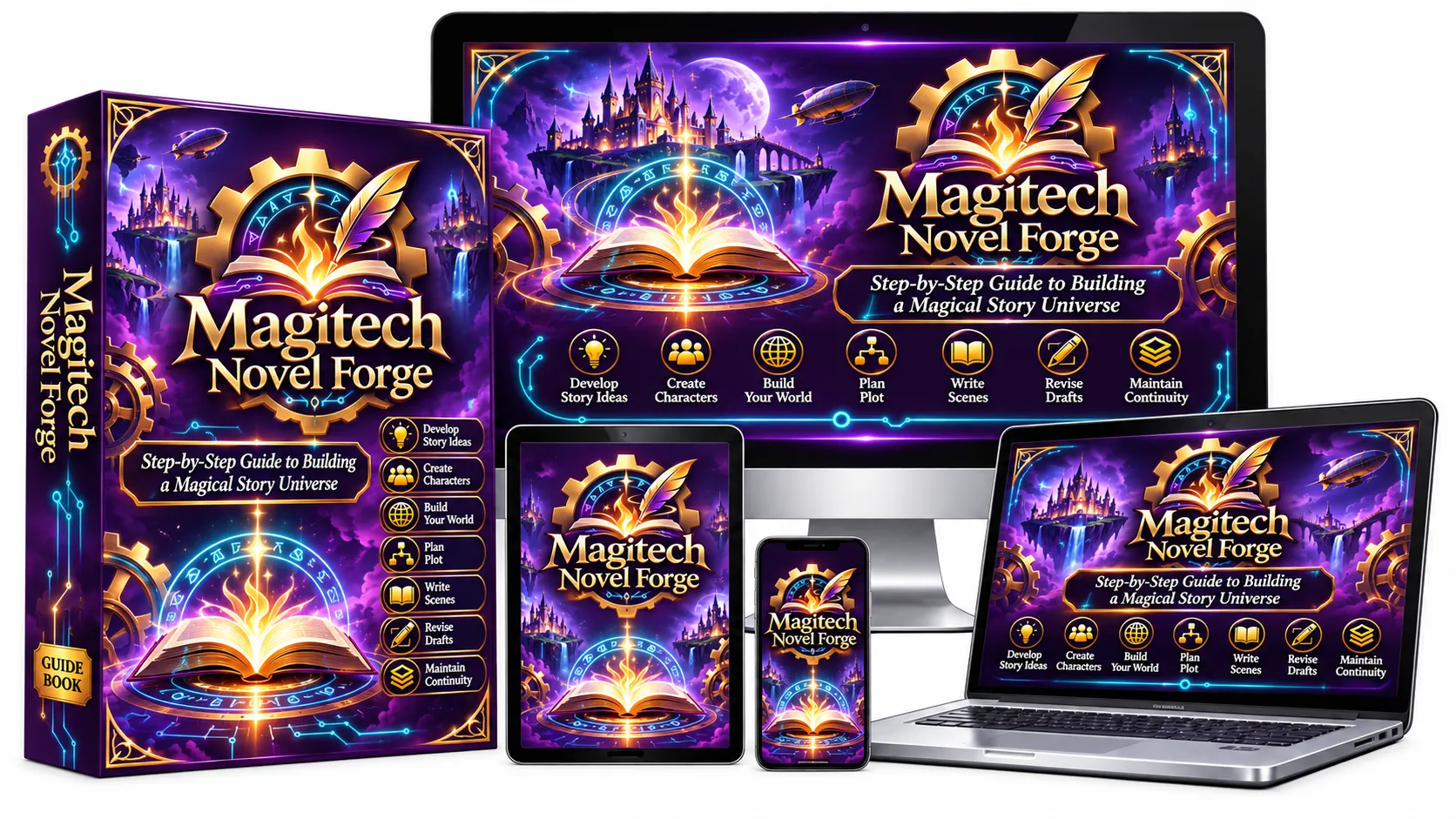
Magitech Novel Forge is a ready-to-use Skill for Claude, built specifically for people who have never written a book. It does not assume you know a single writing term. When you start, it interviews you in plain language, offers you clear choices, explains every concept as you go, and walks you through the entire process of building a novel - from the first spark of an idea to an assembled manuscript.
And it focuses on one genre with ferocious attention: Magitech fantasy - stories where magic and technology collide. Think arcane engines, spell-powered cities, enchanted machinery, soul-fueled reactors. A genre readers love, and one that is surprisingly hard to do well, because the magic has to feel as engineered as it is wondrous.
Here is the key difference between this and every generic “AI novel writer” prompt you have seen:
Magitech Novel Forge is built around Gates.
A Gate is a checkpoint. Before the Skill lets you move to the next stage, the current stage must actually be solid. Your conflict must be clear before you build characters. Your magic must have limits before you build your world. Your canon must be updated before you write the next chapter. No skipping. No shortcuts. No half-baked foundations quietly collapsing on page 200.
It is the difference between a rushed first draft and a book that holds together.
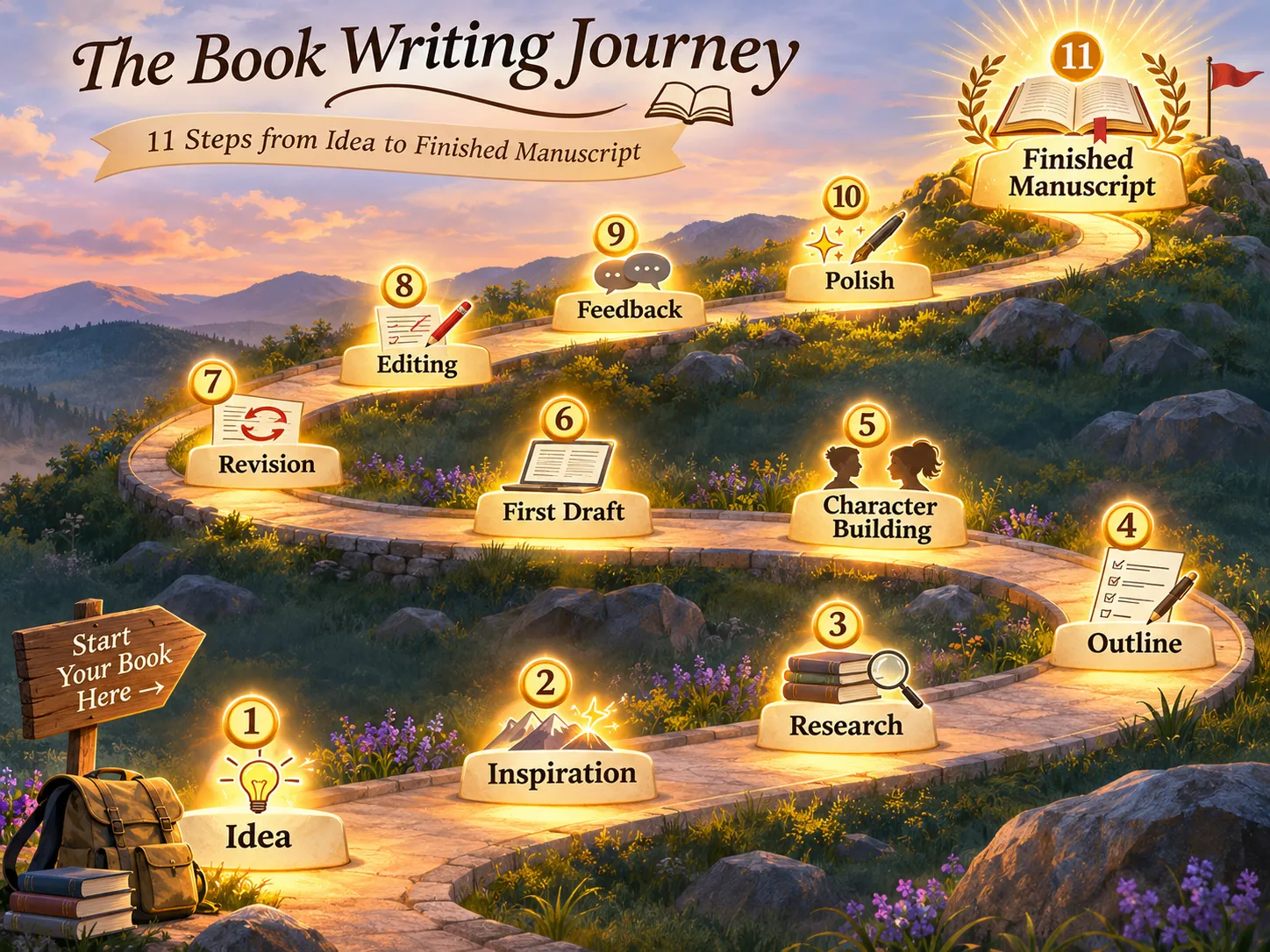
The 11-Stage Path From “I Have an Idea” to “I Have a Manuscript”
Each stage has a clear purpose and a Gate you must clear before moving forward.
Story Discovery
Claude interviews you like a friendly editor: subgenre, target reader, tone, book length. Gate: your idea, central conflict, and the role of Magitech must be crystal clear.
Character Architecture
Build your protagonist, antagonist, and at least three supporting characters who each serve the plot. Gate: motives, flaws, voices, and journeys must be defined.
Magitech System Engineering
Design energy sources, rules, devices, costs, limits, and consequences. Gate: your magic-tech can never be all-powerful.
Worldbuilding Architecture
Society, economy, politics, geography, and how Magitech reshapes them. Gate: world rules must be consistent and serve the story.
Relationship & Emotional Stakes
Friendship, love, family, betrayal, moral conflict. Gate: relationships must actually change choices and consequences.
Master Plot Blueprint
Opening, inciting incident, turning points, climax, ending. Gate: inner and outer conflict must be woven together.
Chapter & Scene Architecture
Every chapter and scene mapped. Gate: each scene needs a goal, obstacle, turning point, emotion, character voice, and a memorable image.
Full Manuscript Drafting
Actual prose, chapter by chapter or scene by scene - not just outlines. Gate: canon and plan are re-read before writing.
Story Canon & Continuity Tracking
Timeline, injuries, devices, secrets, relationships, character status. Gate: updates completed after every writing session.
Adversarial Manuscript Review
Hunts for logic errors, clichés, flat characters, magic contradictions, and plot holes. Gate: no self-grading shortcuts replace real problem-finding.
Targeted Revision & Manuscript Assembly
Fix what the review found, check every chapter, and assemble the manuscript in the right order. Gate: no missing chapters, no leftover placeholders, no accidental unfinished endings.
Price rises $0.50 every hour until $17 • Instant access
The Secret Weapon: The Magitech Engineering Engine
Here is where Magitech Novel Forge stops being “another AI writing tool” and becomes something genuinely different.
Most fantasy novels treat magic as wallpaper. It looks pretty, sparkles on cue, and solves problems whenever the author gets stuck. Readers feel the cheat, even if they cannot explain why. The tension drains out of the story.
Great Magitech stories do the opposite. Their magic has a price. It breaks. It creates winners and losers. It forces impossible choices. The technology is not decoration - it is the engine of the conflict itself.
So every Magitech device or system you create in the Forge is built from nine required fields. You cannot skip them. Here is a real example:
| Field | Example: The Memory Engine |
|---|---|
| Technology | Memory Engine |
| Energy Source | Crystallized human memories |
| Function | Powers the floating city |
| Operating Rule | Only emotionally rich memories can be used |
| Cost | The donor permanently loses that memory |
| Limitation | A consumed memory can never be regenerated |
| Failure Mode | The engine accidentally absorbs memories it was never meant to take |
| Social Impact | The poor sell their memories to survive |
| Plot Integration | The hero must choose between saving the city and keeping the memory of her family |
Look at what just happened. In nine short lines, a cool gadget turned into a moral dilemma, a class struggle, a ticking-clock risk, and a heartbreaking climax choice. That is not decoration. That is a story generator.
When your magic is built this way, your plot almost writes itself, because every use of the technology creates consequences - and consequences are what readers turn pages for.
You do not need to know how to do this. The Skill asks you simple questions in everyday language and fills the structure with you. Every device. Every time.
“What If Claude Forgets My Story Halfway Through?”
This is the number one fear of anyone who has tried to write something long with AI, and it is a completely legitimate one.
AI does not have a perfect memory across long projects and separate chat sessions. That is simply how it works today. And any product that promises otherwise, or promises you a 100,000-word novel in a single response, is not being honest with you.
So Magitech Novel Forge does not pretend. It solves the problem the practical way.
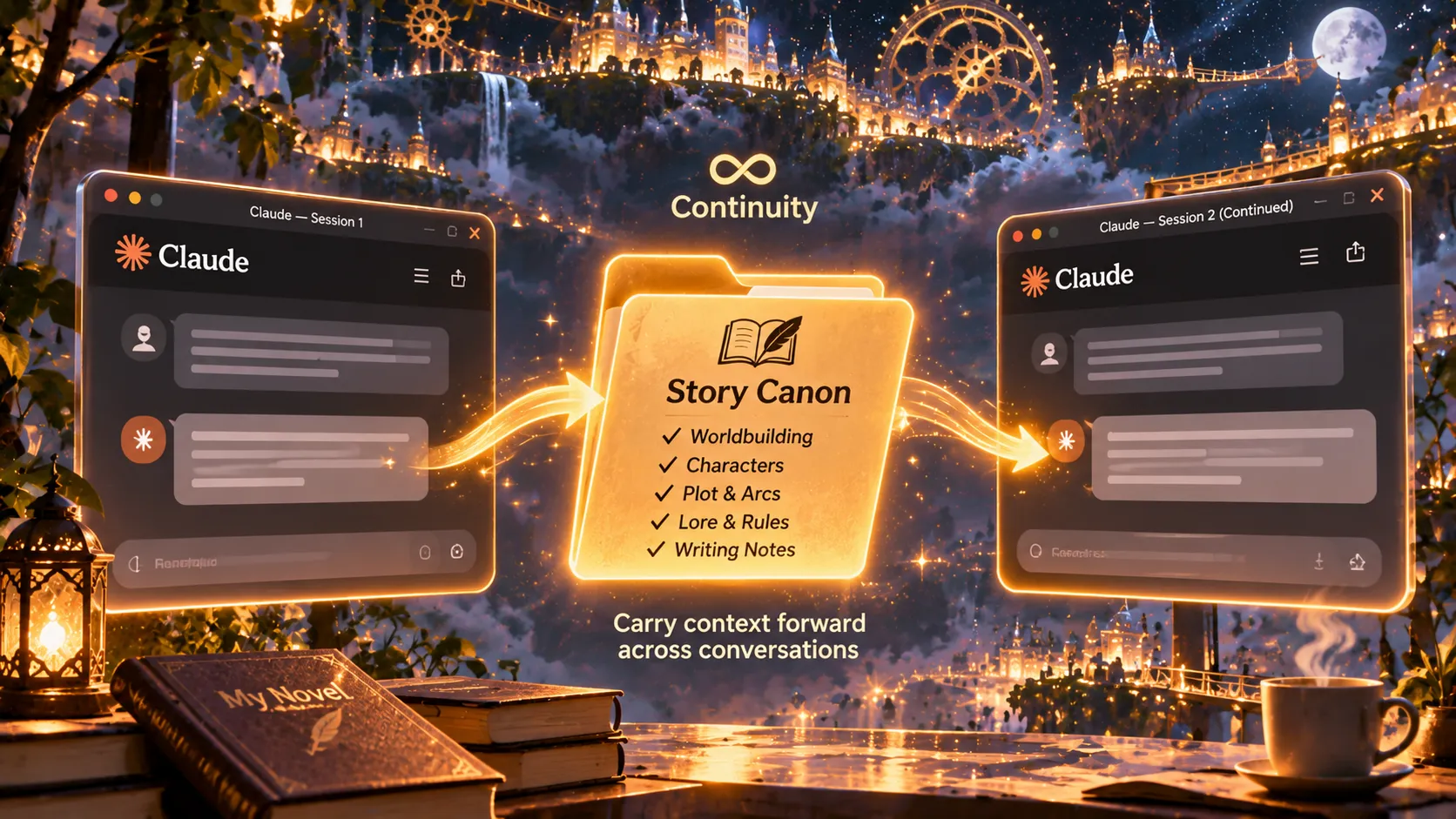
After every chapter, the Skill updates your project state. Your timeline, injuries, devices, secrets, relationships, and character statuses are recorded. When you open a fresh Claude session, you simply give it back the files it needs and continue exactly where you left off.
No reliance on Claude “remembering” a conversation from three weeks ago. No fantasy promises. Just a clean, honest, repeatable system that keeps your book consistent from the first chapter to the last.
That is how a real novel gets written: in steady sessions, one chapter at a time, with the story bible kept up to date.
Six Modes. One Skill. Every Situation Covered.
Not everyone starts in the same place, so the Forge adapts to you:
| Mode | Name | What it does |
|---|---|---|
| A | Guided Novel Creation | Builds a book from absolute zero for complete beginners. |
| B | Idea to Blueprint | Turns your existing idea into a full novel plan. |
| C | Chapter Writing | Writes complete chapters, one at a time. |
| D | Continue My Novel | Picks up a book you have already started. |
| E | Review & Repair | Inspects your manuscript and fixes what is broken. |
| F | Series Blueprint | Plans a trilogy or a multi-book series. |
Starting from nothing? Mode A holds your hand. Already have a notebook full of ideas? Mode B organizes them. Stuck on Chapter 9 of a manuscript you abandoned last spring? Mode D and Mode E are waiting.
And if your world is so big that one book will not hold it, Mode F helps you plan a whole series from the start, so you do not paint yourself into a corner.
Pick the Book You Actually Want to Write
You are not locked into one length. Choose the format that fits your ambition and schedule:
| Format | Target length |
|---|---|
| Short Novella | 15,000–25,000 words |
| Novella | 25,000–40,000 words |
| Short Novel | 40,000–60,000 words |
| Standard Novel | 60,000–90,000 words |
| Epic Novel | 90,000–120,000 words |
These are design presets inside the Skill - flexible guidelines, not publishing-platform rules.
And here is the part I am proudest of: everything is available right away in the front-end product. No book length is locked behind a later upsell. If you want an epic, you can build an epic.

Who Is This For? (And Who Is It Not For?)
I would rather be honest with you than take your money and leave you disappointed. So:
Magitech Novel Forge is perfect for you if:
- You have never written a book and have no idea where to begin.
- Words like “story arc,” “inciting incident,” and “character motivation” feel intimidating or vague.
- You love fantasy, science fantasy, steampunk, or anything where magic meets machines.
- You want to write an English-language novel with Claude as your partner.
- You have tried AI writing before and got shallow, inconsistent results.
- You want a structured process that explains itself as you go.
It is probably not for you if:
- You want a button that instantly produces a flawless 100,000-word book with zero involvement from you.
- You are not willing to answer questions about your own story.
- You want a tool for a genre unrelated to fantasy or Magitech.
This is a collaboration. You bring the vision and the decisions. The Skill brings structure, patience, and tireless drafting. Together, that is a powerful combination.
What Happens When You Use It: A Quick Walk-Through
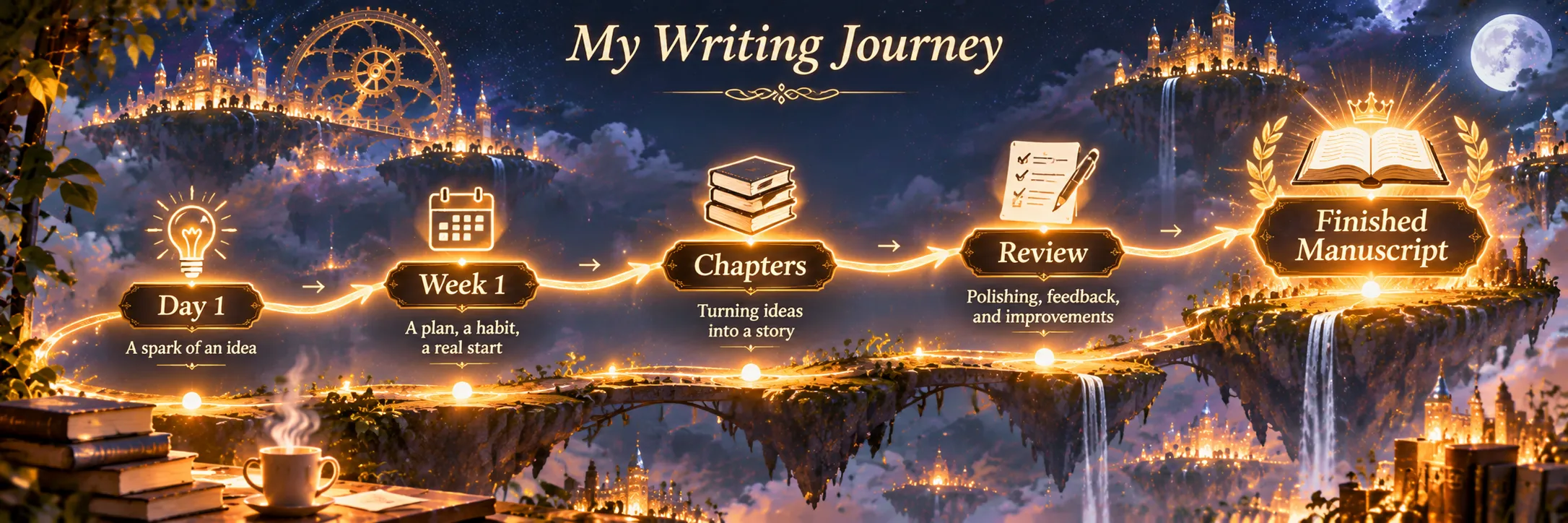
Minute one: You load the Skill into Claude and choose Mode A. Claude greets you and asks a few friendly questions: what kind of stories you love, who you are writing for, what tone you want.
Day one: You emerge with a clear premise, a central conflict, and a defined role for Magitech. For many people, this is the first time their idea has ever felt real.
Week one: Your characters have flaws, voices, and secrets. Your Magitech has a cost. Your world has politics and pressure points. You have a plot blueprint with a beginning, a breaking point, a climax, and an ending that pays off.
Then: You move into chapters. Real chapters, with real prose. After each one, the canon is updated. When a session ends, you save your files. When you return, you pick up exactly where you stopped.
At the end: The Skill hunts for weaknesses in your draft - clichés, contradictions, thin characters - and helps you repair them. Then it assembles your chapters in order and checks that nothing is missing.
That is the path. It is not instant. It is not magic. But it is clear - and clarity is what has been missing all along.
Price rises $0.50 every hour until $17 • Instant access
A Quick Word About Cost
Consider what it usually takes to get help writing a novel.
A developmental editor can charge hundreds or even thousands of dollars to review a manuscript. A book-coaching program can run into the thousands. Writing courses are often priced in the hundreds, and many only teach theory - they leave the actual writing to you and a blank screen.
Magitech Novel Forge gives you the structure, the questions, the guardrails, and the drafting engine in one Skill, inside the Claude tool you may already be using.
And yes, this is a real investment in finishing something that has been living in your head for years. A book you can hold. A world other people can step into.
Here’s Everything You Get Today
- The complete Magitech Novel Forge Claude SkillIncluded
- All 11 gated stages, from Story Discovery to Manuscript AssemblyIncluded
- The Magitech Engineering Engine (9 required fields per technology)Included
- All 6 operating modes (A through F)Included
- Series Blueprint mode for trilogies and beyondIncluded
- Canon & continuity tracking system for long projectsIncluded
- All 5 book-length presets, nothing lockedIncluded
- True PLR licenseIncluded
Price rises $0.50 every hour until $17 • Instant access
Who I Am

Nhan Scope
Digital Product Specialist · Creator of Magitech Novel Forge
Hi, I’m Nhan Scope. I build digital products and SaaS tools that make content creation simpler for publishers, course creators, and creative professionals. Magitech Novel Forge comes from that same focus: a clear system beginners can follow, so a vague story idea can become a finished manuscript without getting lost in theory or blank-page overwhelm.
Refund Policy
Within 14 days of purchase, open the skill, read the license terms, and walk a one-line idea through the first stages. If you hit a problem, email nhanscope@gmail.com - we reply within 24 hours. A refund applies when you’ve contacted support within 14 days and we cannot resolve a product, setup or delivery issue. It does not guarantee business results, sales or income. A completed refund ends the license.

Frequently Asked Questions
I have never written anything. Is this really for beginners?
Yes. This is the entire point. The Skill explains each concept in plain language, offers choices instead of blank-page demands, and guides you stage by stage. You do not need to know any writing terminology.
Do I need a paid Claude account?
You can get started with a free Claude account. Magitech Novel Forge runs inside Claude, and usage limits depend on whichever Claude plan you are on.
Will it write my entire novel in one go?
No, and we will not pretend it can. Long books are built chapter by chapter across sessions. The Skill updates your canon after each writing batch so you can resume cleanly.
Is the writing in English?
Yes. Magitech Novel Forge is designed to help you create English-language fantasy fiction.
What if my idea is still vague?
Perfect. Mode A and Mode B exist for exactly that. The Skill will interview you and help sharpen the idea into a clear premise and conflict.
Can I plan a series instead of one book?
Absolutely. Mode F builds a trilogy or series blueprint so your books connect, escalate, and pay off.
Are all book lengths available right away?
Yes. Every length preset, from Short Novella to Epic Novel, is available immediately. Nothing is locked behind a later upgrade.
What does “True PLR” mean here?
You get a license to use Magitech Novel Forge personally or in your business, edit it, rename/rebrand it, and sell your rebranded edition while keeping the sales revenue (minus fees, taxes, and costs). Your customers may use it for their own work and publish their original outputs, but they may not resell or rebrand the files. You handle their support and refunds.
You may not sell or transfer the PLR rights themselves, put the original package in freebie vaults/public repos/torrents, give customers resale rights, or claim endorsement by Anthropic, Amazon, or WarriorPlus. Distribute a rebranded edition - not the original PLR kit. Examples are training material, not ready-made books to publish unchanged. Platform access (like Claude) is separate. Full terms apply at purchase.
The Choice in Front of You
You can close this page and go back to the way things were. The idea stays in your head. The cursor keeps blinking. Another year passes, and the world you imagined remains unwritten.
Or you can take one small step today. One Skill. A clear path with eleven checkpoints, built so a complete beginner can follow it.
Imagine, a few months from now, scrolling to the last page of a manuscript that is yours. Every chapter in place. Every character alive. A Magitech world with rules, costs, and consequences that make readers lean in. You wrote that. You finished it.
That version of you is not a different, more talented person. It is simply you, with a system.

Price rises $0.50 every hour until $17 • Instant access
P.S. The hardest part of writing a novel is not talent. It is not time. It is knowing what to do next. Magitech Novel Forge answers that question at every single stage, so you never have to stare at a blank page wondering where to start.
P.P.S. Remember, every Magitech system you build gets a cost, a limit, and a consequence. That is what makes readers care. The Skill enforces it for you - and that alone can lift your story above most of what AI produces on its own.
P.P.P.S. Your story is not going to write itself. But with the right structure, it finally can be written. Click here to begin your novel today.