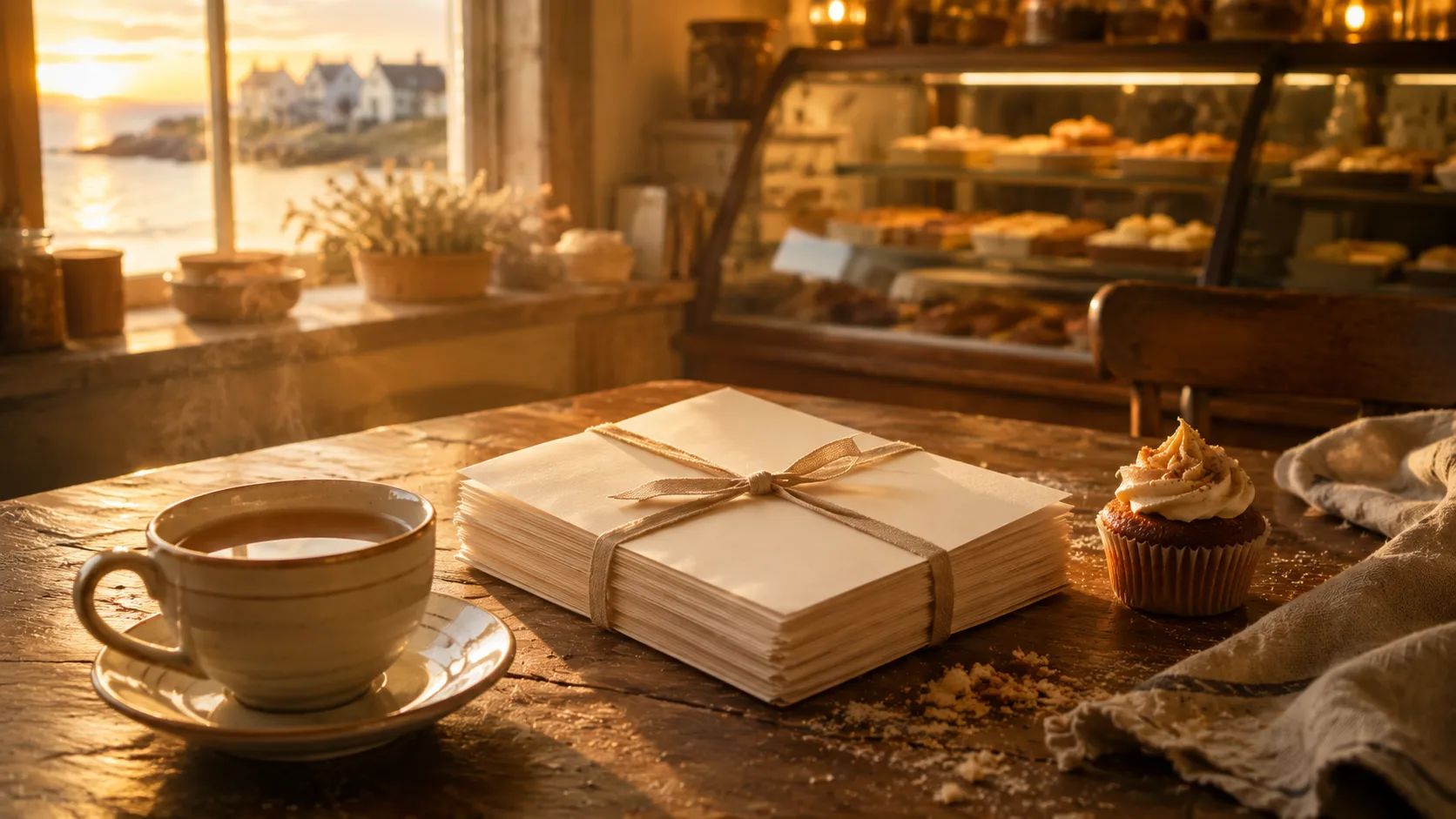
At five in the morning, Bellwether Bay belonged to gulls, delivery trucks, and people who had made questionable career choices.
I was beginning to suspect I belonged in the third category.
The key stuck halfway into the front lock of Harbor & Hearth, as it had every morning since I reopened the bakery. I jiggled it twice, leaned my shoulder against the blue-painted door, and whispered a threat involving replacement hardware.
The lock surrendered.
"Good decision."
I slipped inside and closed the door against the damp predawn air.
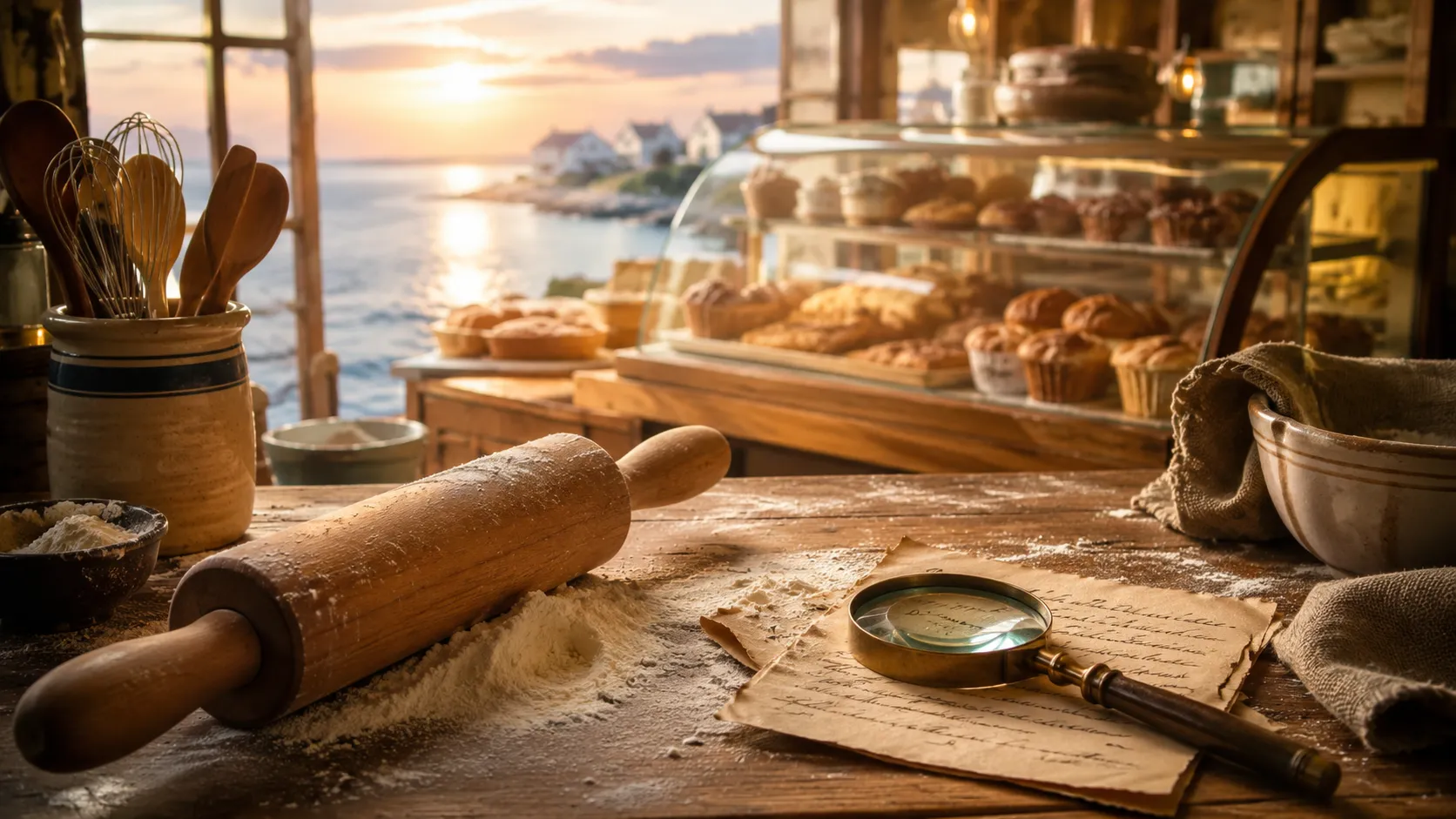
The bakery was dark except for the pale glow from the streetlamps outside. Chairs sat upside down on the café tables. The glass pastry case waited empty beneath its newly installed pendant lights. Beyond it, through the open doorway to the kitchen, stainless-steel counters gleamed with the sort of optimism only possible before anyone started baking.
For approximately six seconds, I stood there and let myself enjoy it.
My bakery.
Even after months of renovation, unexpected invoices, paint samples, permit forms, and one plumbing emergency that had made me briefly consider fleeing Bellwether Bay for a second time, the words still produced a small, private thrill.
Then I looked at the order sheet clipped beside the register.
The thrill developed anxiety.
The Harbor Days organizing committee wanted breakfast for forty-eight people.
Not coffee and a muffin each, which would have been reasonable. No. They wanted pastry trays, fruit, savory breakfast tarts, coffee service, and six dozen Bellwether Buns.
All by seven thirty.
I tied on my apron.
"Right," I told the empty bakery. "We wanted success."
The bakery, having no sympathy whatsoever, remained silent.
I switched on the kitchen lights and began.
Baking had an order to it that I liked. Flour before dough. Dough before proofing. Cold butter stayed cold until I needed it otherwise. A timer went off because I had told it when to go off, not because it had reconsidered its priorities halfway through the morning.
People were rarely so cooperative.
By five fifteen, the first trays were lined up on the worktable. I moved between the mixer and the ovens, portioning dough, checking yesterday's prepared fillings, and counting under my breath.
The Bellwether Buns were the important part.
They had become Harbor & Hearth's signature almost by accident after reopening. They were soft, buttery, generously swirled, and just complicated enough that people assumed I had some sort of secret technique.
My secret technique was waking up obscenely early.
I slid the first tray into the oven and set the timer.
Warm air gathered in the kitchen. Soon the bakery smelled of butter, yeast, sugar, and coffee from the pot I had started for myself but had so far forgotten to drink.
Outside the front windows, Bellwether Bay was beginning to emerge from the dark.
Main Street ran downhill toward the harbor, where the first fishing boats were already moving against a gray-blue horizon. Harbor Days banners hung from lampposts along the sidewalks, their corners fluttering in the breeze. Someone had attached a string of little nautical flags to the florist's awning across the road. By lunchtime the street would be full of volunteers putting up booths, arguing over extension cords, and insisting everything was perfectly under control.
It was not perfectly under control.
I knew because I had attended the organizing meeting the night before.
For ninety minutes.
On my only evening that week when I might otherwise have been asleep before ten.
I pressed my palms against the worktable and reminded myself why I had agreed to the catering job.
Harbor Days was one of Bellwether Bay's biggest events. Thousands of visitors came through town over the festival weekend. They bought lobster rolls on the waterfront, pottery from local artists, things with anchors printed on them that no permanent resident would willingly purchase, and-if everything went according to my increasingly ambitious plan-pastries from Harbor & Hearth.
The bakery needed them.
Renovating the place had taken more money than I liked admitting, even to myself. Returning to Bellwether Bay had sounded simple when it was still an idea: come home, restore the old bakery, start over.
Ideas rarely included contractor deposits.
Or commercial oven repairs.
Or lying awake at two in the morning wondering whether returning home at my age counted as rebuilding my life or retreating from it.
I picked up my neglected coffee.
Harbor & Hearth was open. Customers were coming back. The Harbor Days committee had trusted me with breakfast.
That was enough for one morning.
I took a sip.
Cold.
"Excellent."
The timer rang.
By five thirty-five, every available surface seemed to contain something in progress.
One tray cooled. Another baked. Pastry dough waited under a cloth. Coffee burbled in the big service urn. I had flour on my apron, flour in my hair, and somehow flour on the back of my wrist.
This was normal.
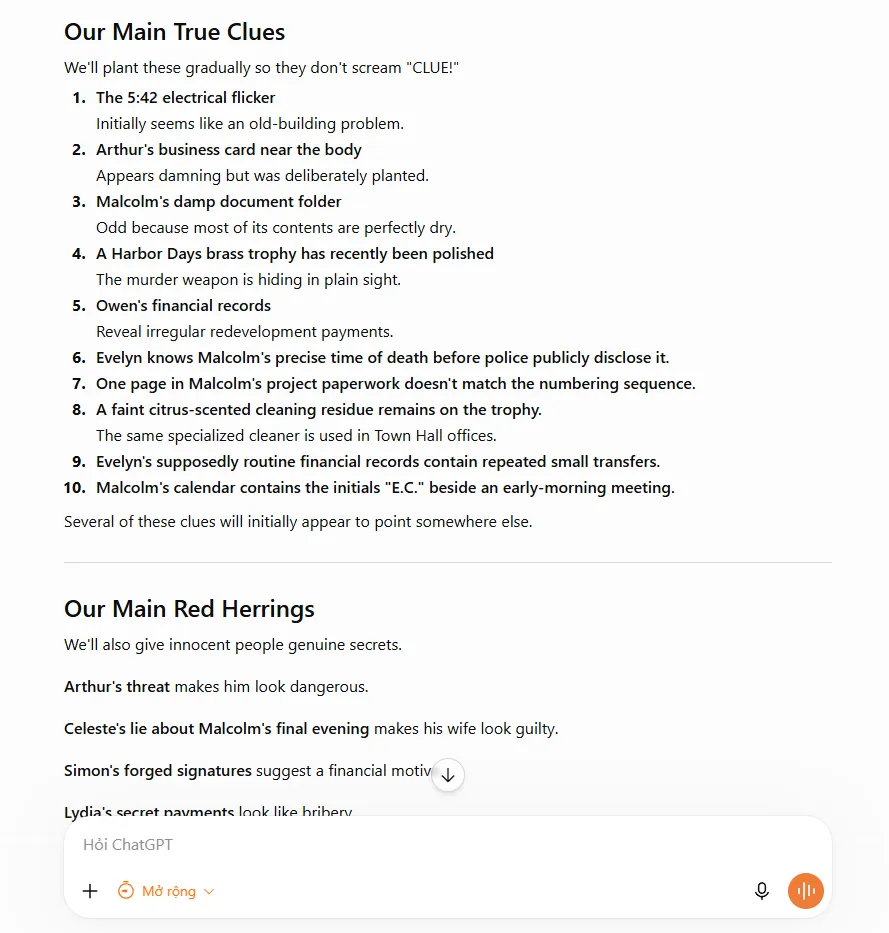
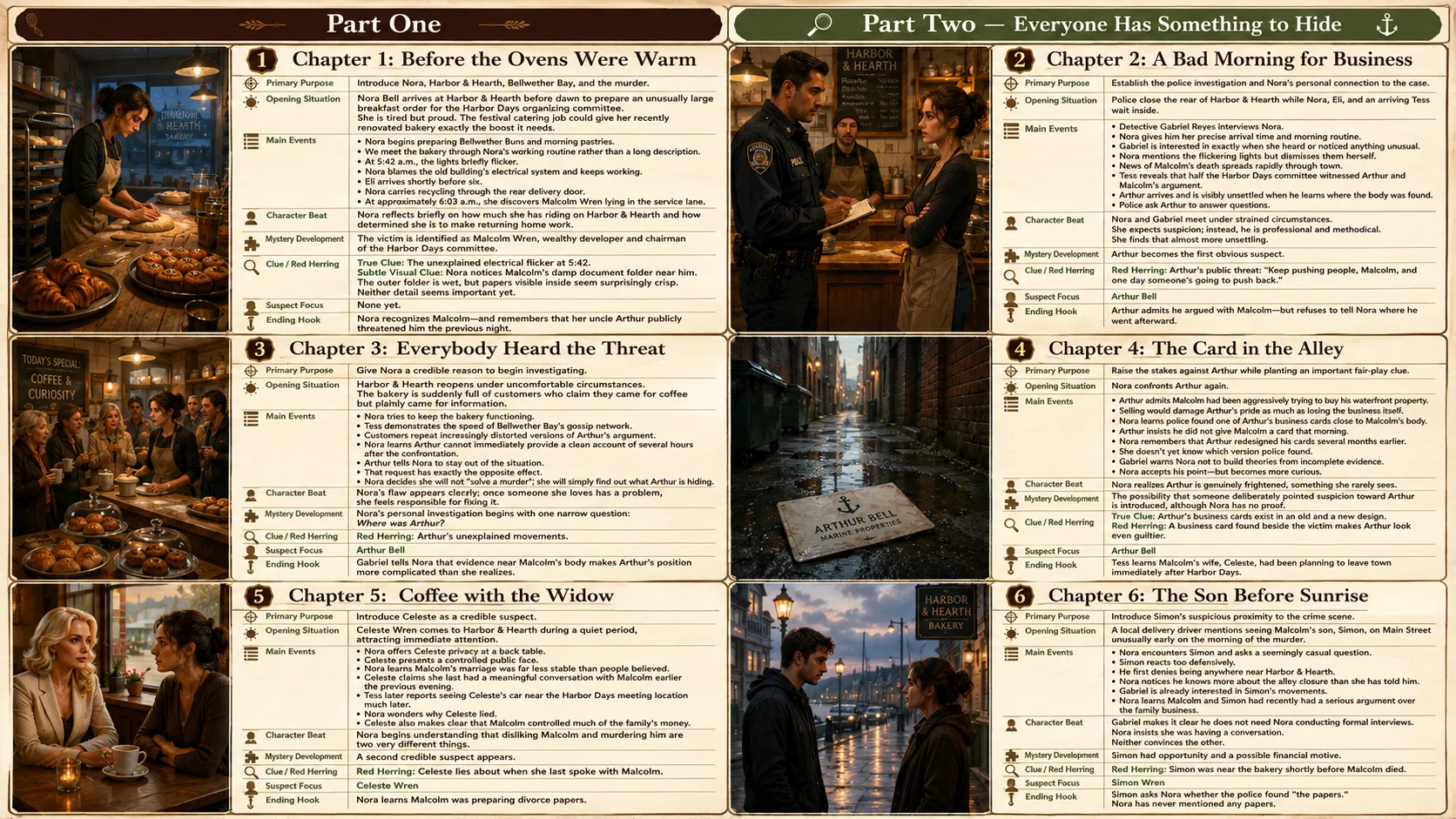
I was arranging the next tray when the kitchen lights flickered.
Once.
Twice.
The mixer gave a brief unhappy whine.
Then everything returned to normal.
I stopped with one hand hovering over the dough.
The clock above the back prep counter read 5:42.
I stared at the lights.
"Don't."
Nothing happened.
I pointed a floury finger toward the ceiling.
"I mean it."
The building was old enough to have opinions about electricity. The renovation had corrected the most urgent problems, which was contractor language for you will almost certainly not burn down, but every so often Harbor & Hearth reminded me that attractive historic character came bundled with unattractive historic wiring.
The oven was still running.
The mixer was still running.
No smoke appeared from the walls.
I added "call electrician" to the mental list already containing nineteen other things and went back to the buns.
Five minutes later, I had forgotten about the flicker entirely.
At 5:56, the back door opened.
I nearly launched a pastry scraper across the kitchen.
"Morning," Eli said.
I pressed a hand to my chest. "You're going to kill me."
He froze with one shoulder still against the door. "What?"
"Not literally."
"Oh."
"That was not an invitation to look relieved."
Eli gave me the cautious smile of someone still learning which of my statements required a response.
He was carrying his jacket under one arm, his dark hair damp from the coastal mist. He had been helping at Harbor & Hearth long enough to know where everything belonged and not quite long enough to stop asking permission before touching it.
He surveyed the kitchen.
"Wow."
I followed his gaze.
Trays crowded the cooling racks. Bowls filled the sink. The worktable had disappeared beneath sheet pans and parchment.
"That," I said, "is what success looks like before sunrise."
"It looks stressful."
"You're catching on."
He hung up his jacket and washed his hands.
"What do you want me to do?"
"Coffee service first. Then start boxing the cooled buns. And if anyone from the committee arrives early, tell them breakfast is absolutely under control."
He glanced at me.
"It is under control, right?"
"Eli."
"Right. Sorry."
He went to work.
Having another person in the kitchen changed the rhythm immediately. Eli stacked boxes while I glazed the first batch of buns. He checked the coffee urn twice. I checked it after him because apparently reopening a bakery had transformed me into the sort of person who distrusted other adults around hot beverages.
At six, the town clock chimed from somewhere beyond Main Street.
Six low notes drifted through the building.
I straightened.
"We're fine."
Eli looked up. "Were we not fine?"
"We were always fine."
He wisely returned to the pastry boxes.
I surveyed the worktable and recalculated.
The buns were ahead. The savory tarts needed another twelve minutes. The fruit trays could wait. We had enough coffee. If nothing caught fire and no committee member appeared demanding an emergency vegan croissant, we might actually make the deadline comfortably.
I gathered a stack of flattened ingredient cartons and tied off the bag of recycling under the prep counter.
"I'm taking this out."
"I can do it."
"You keep boxing."
The rear delivery door opened onto the service lane behind Harbor & Hearth, a narrow stretch of patched pavement running behind several Main Street businesses. In daylight it was an unremarkable collection of dumpsters, delivery doors, drainpipes, and the occasional bicycle chained somewhere it probably should not have been.
At six in the morning, it was cold and gray and slick from an overnight mist.
I nudged the door open with my hip.
The change from the warm kitchen to the damp outside air made me shiver.
Somewhere near the harbor, a gull screamed as if personally offended by the sunrise.
"Same," I muttered.
I carried the recycling toward the bins.
The lane was brighter than it had been when I arrived, though the sun had not yet made an appearance. Pale light collected in the wet patches on the pavement.
I reached the recycling bin.
Something lay near the wall beyond it.
At first, I thought it was a bundle of discarded clothing.
Then I saw a shoe.
A polished black shoe.
I stopped.
The bag slipped in my hand.
There was a man lying on the pavement between Harbor & Hearth's rear entrance and the neighboring building.
For one strange second, my mind refused to understand what my eyes had already reported.
Someone had fallen.
That was all.
A man had fallen, and perhaps he was hurt, and I should help him.
I let the recycling drop and hurried forward.
"Sir?"
No response.
"Can you hear me?"
My steps slowed as I drew closer.
He lay partly on his side, one arm bent awkwardly beneath him. His expensive dark coat was damp along one shoulder. Rain-or mist, or water from the pavement-had darkened the fabric.
A leather document folder rested nearby.
Its surface was wet.
The corner had fallen open, exposing a few white sheets inside that looked oddly clean and crisp against everything else in the damp lane.
I barely registered it.
I was looking at the man.
"Sir?"
I crouched without touching him.
The stillness was wrong.
Not sleeping.
Not resting.
Wrong.
My mouth went dry.
Behind me, the bakery door opened.
"Nora?"
Eli's voice sounded impossibly far away.
"Stay there."
Naturally, he did not.
His footsteps came closer and stopped sharply.
"Oh."
I pulled my phone from my apron pocket with fingers that suddenly felt too large to operate it.
"Call emergency services," I said.
"You have your phone."
"I know. Call them anyway."
He did.
I stared at the man's face.
Recognition arrived slowly, then all at once.
I had seen him less than twelve hours earlier across a crowded meeting room.
Malcolm Wren.
Developer. Waterfront property owner. Chairman of the Harbor Days organizing committee.
The man whose breakfast order was, at that very moment, cooling inside my bakery.
The man who had spent most of the previous evening making everyone in the room angry.
Especially my uncle.
A memory surfaced with awful clarity: Arthur standing across the committee table from Malcolm, jaw tight, one hand flat against the stack of development plans between them.
Malcolm had smiled.
Arthur had not.
Keep pushing people, Malcolm, and one day someone's going to push back.
I looked down at Malcolm Wren lying motionless behind my bakery.
The ovens inside Harbor & Hearth were finally warm.
The morning had gone cold.