Shigai Royalty Review 2026: Is the $19 Front End Worth It?
I've tested more KDP "shiny object" software than I care to admit. Most of it gets uninstalled within a week. Here's my hands-on breakdown of what worked, what gave me pause, and exactly who should — and shouldn't — buy it.
Quick verdict: Shigai Royalty is a legitimate cloud-based puzzle-book creation tool, not a guaranteed income system. In my testing, its strongest feature was the verified single-solution puzzle engine. The $19 front end includes enough functionality to create and export publishable books, although buyers should expect upsells and note that the offer is final sale. It is best suited to existing KDP publishers willing to build a catalog.
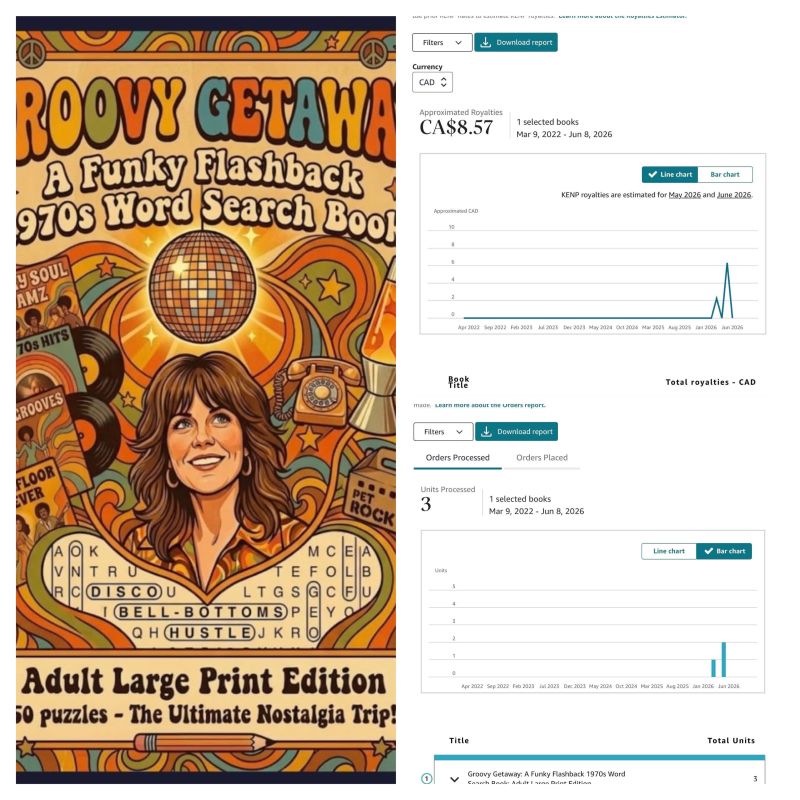
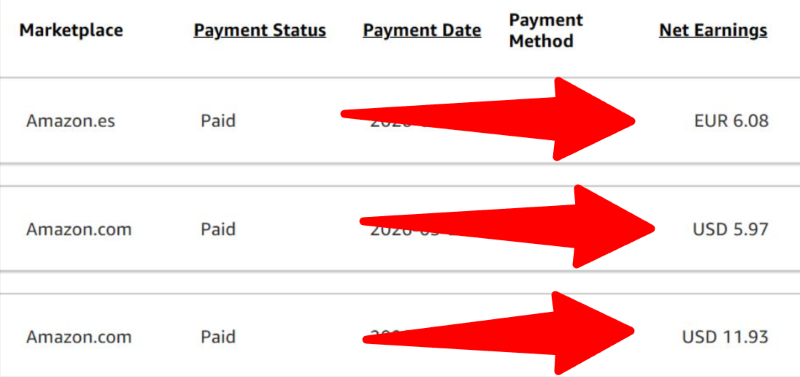
Vendor-supplied member result — independently unverified. Not my personal earnings.
Why I Almost Didn't Bother Reviewing Another KDP Tool
I get pitched three or four "brand new KDP software" launches every single week. Most of them are the same engine wearing a different mascot: pick a theme, mail-merge some clip art, spit out a low-content book, and hope Amazon's algorithm feels generous. I've bought a lot of them. I've refunded a few. I've quietly stopped opening most of them after the first login.
So when "Shigai Royalty" landed in my inbox with the words Murdoku-style whodunit puzzle books attached to it, my first reaction was skepticism, not excitement. I'd already lived through the word search gold rush. I watched that niche go from "empty shelf" to "ten thousand identical covers fighting over the same three keywords" in about eighteen months. I've watched the same thing happen to sudoku, to coloring books, to maze books. The pattern is always identical: a tool makes something easy, everyone floods in at once, and the people who bought "because it was easy" are the first ones to get buried by everyone else who also bought it because it was easy.
That's the trap. Not the tool — the herd.
So before I put my name anywhere near this review, I asked one blunt question: is this actually a different type of puzzle, or just the same low-content book with a new coat of paint? Because if it's the latter, I wasn't interested, and I wasn't going to pretend otherwise for a commission.
What I found changed my mind — not because the marketing is clever (it is, but that's not the point), but because of what's actually happening under the hood when you press "generate." That's what the rest of this review is about.
So What Exactly Is Shigai Royalty?
Strip away the "case file" branding and here's the plain-English version: Shigai Royalty is a cloud-based software that automatically builds complete murder-mystery logic puzzle books — the kind where a reader is handed a grid, a cast of suspects, a set of true clues, and has to deduce by pure logic which suspect ends up alone with the victim.
If you've ever solved a logic-grid puzzle (the kind with a table of checkboxes and clues like "the accountant was not in the library"), you already understand the mechanic. What's different here is the presentation: instead of an abstract grid, the reader is dropped into a mansion, a cast of named suspects, a set of rooms, and a narrative frame. It reads like a whodunit. It solves like a logic puzzle.
In my Amazon checks conducted on July 28, 2026, I found fewer directly comparable narrative logic-grid books than standard sudoku and word-search books. That suggests lower visible competition, but it does not prove demand or profitability.
| Search checked | Date | Visible competition |
|---|---|---|
| murder mystery logic puzzle book | July 28, 2026 | Relatively low |
| sudoku puzzle book | July 28, 2026 | Very high |
| word search book | July 28, 2026 | Very high |
Qualitative snapshot from my own Amazon search checks on the date above — not a counted result total or sales forecast. Amazon result counts fluctuate and are not always shown consistently.
The software handles every part of building that book:
- Generates the suspect cast, the room layout, and a full chain of logic clues
- Mathematically verifies that every single puzzle has exactly one solution, reachable by pure deduction
- Builds the hints page, the step-by-step solution walkthrough, and (optionally) a "how to solve" tutorial spread
- Lays the whole thing out on KDP-ready pages — trim size, margins, fonts, difficulty badges — with a bulk mode to fill an entire book in one pass
- Exports print-ready PDF and unlimited high-resolution PNG files for both paperback and printable-marketplace sales
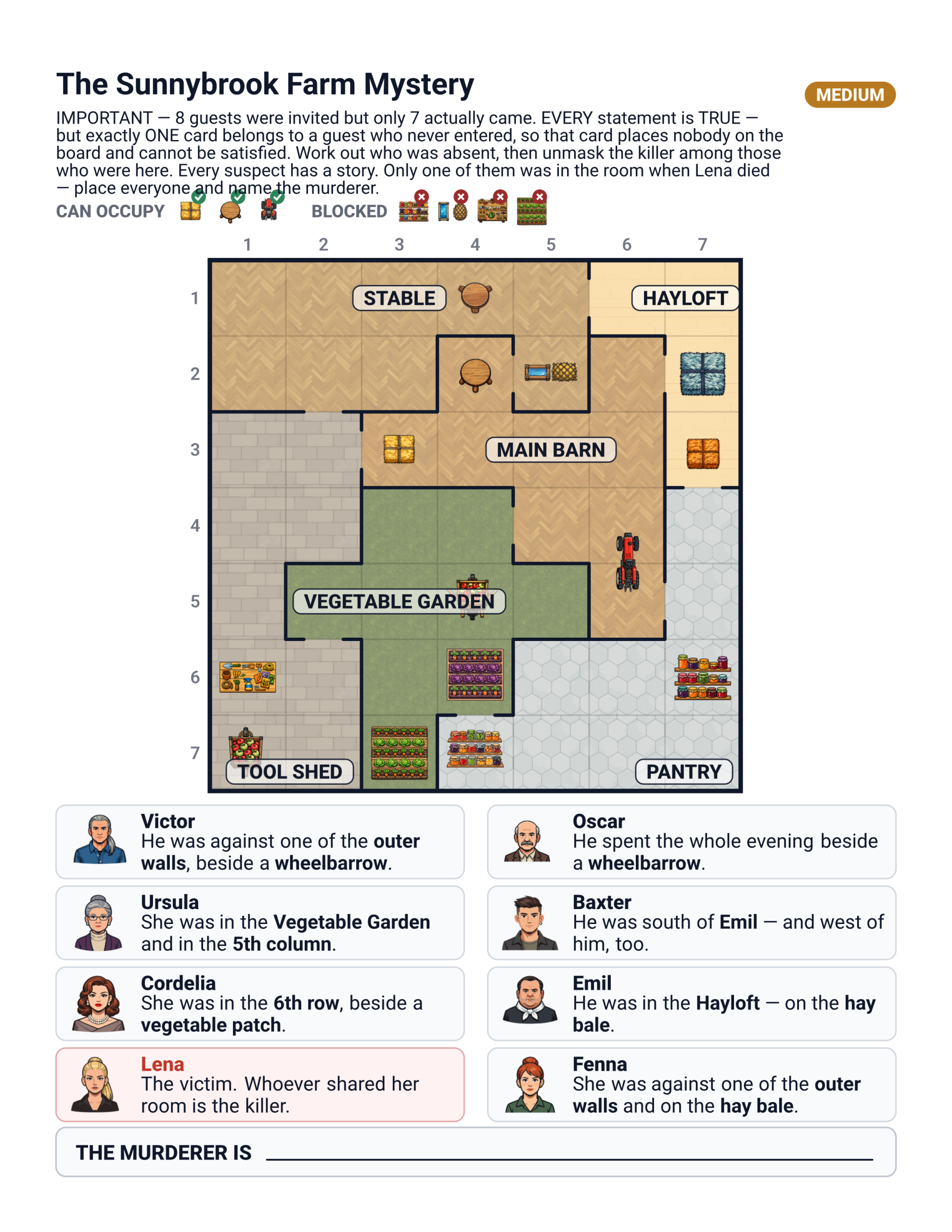
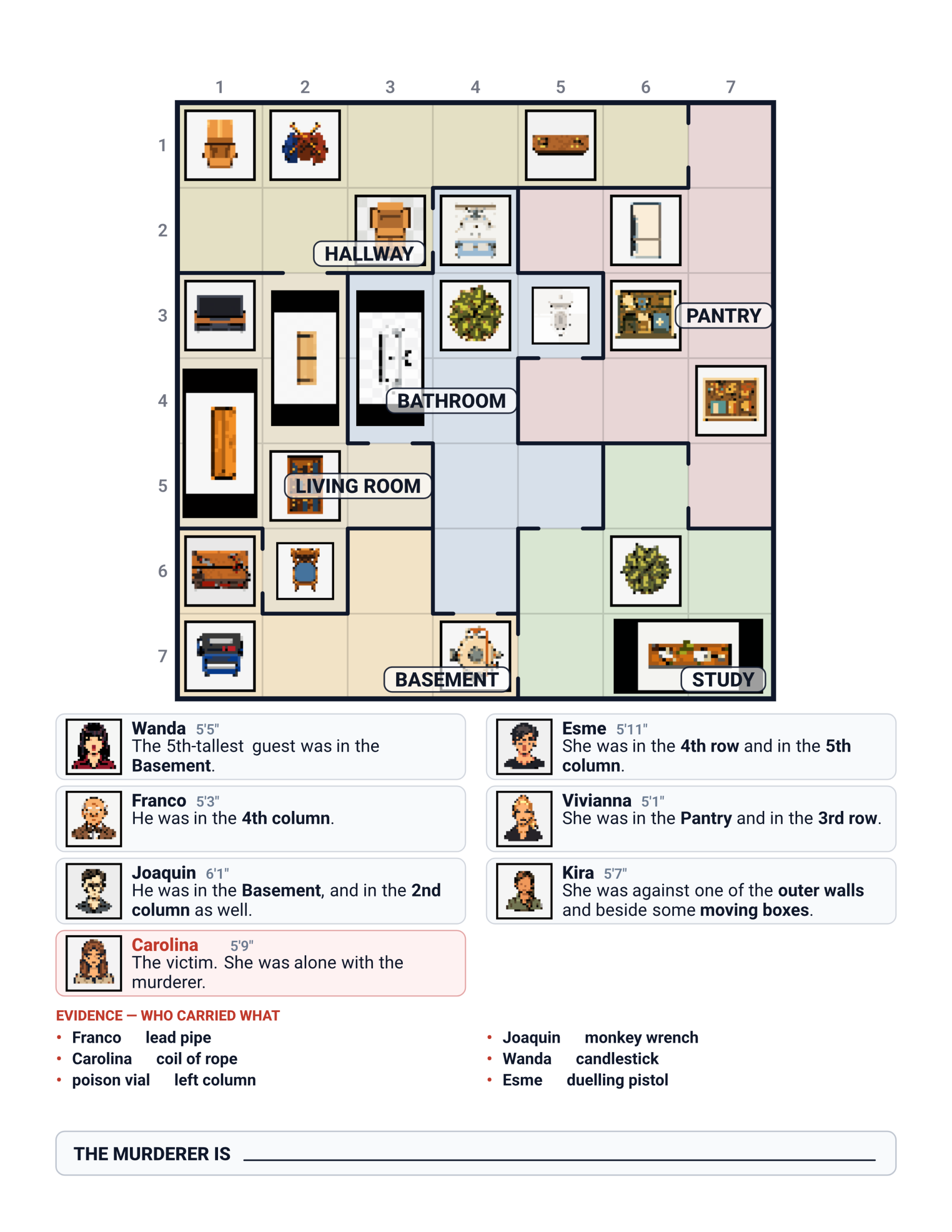
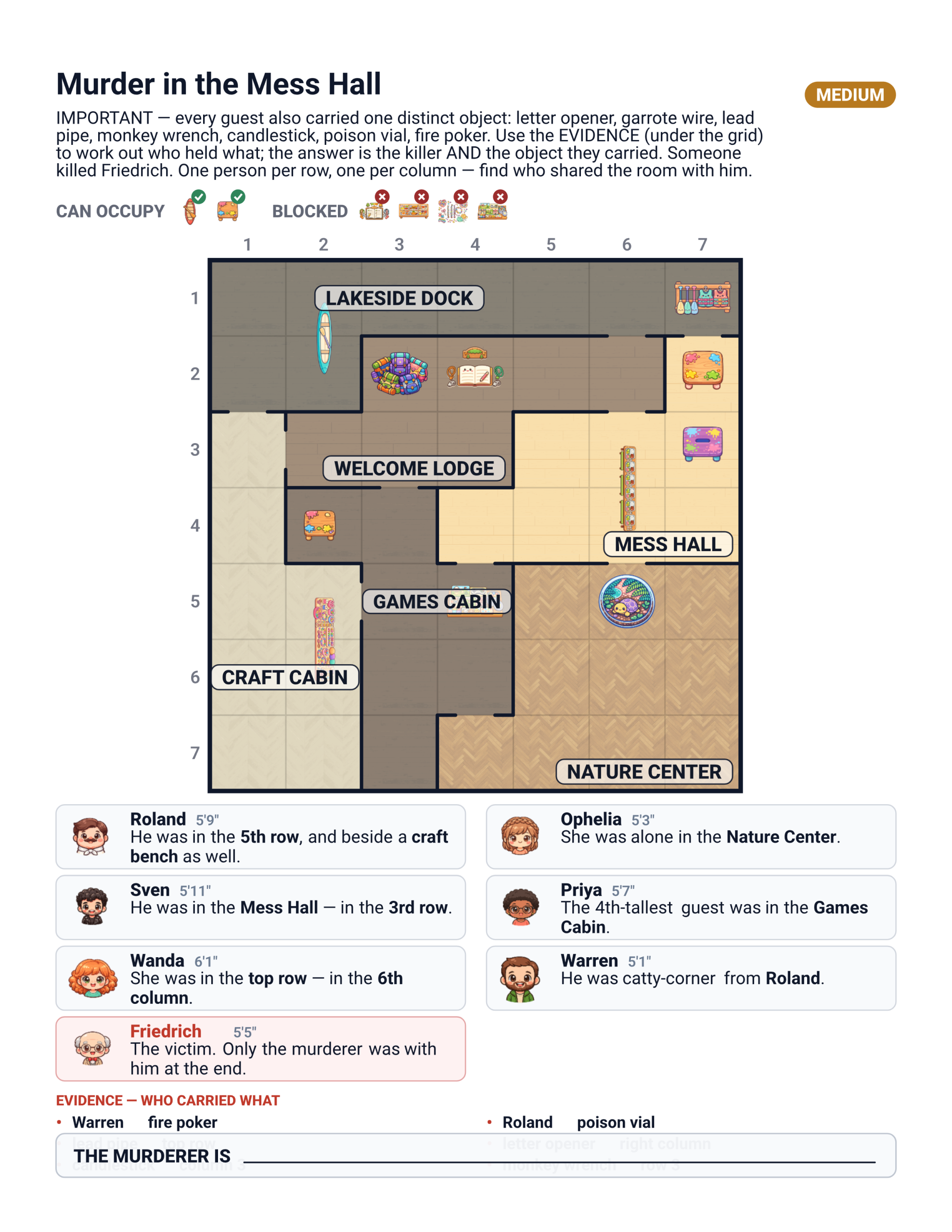
In other words: it is not a "puzzle generator" in the generic sense. It's a narrative logic-puzzle production line. And the thing that keeps that shelf from flooding the way word search did is the same thing that made me skeptical in the first place — building a verified, single-solution logic mystery by hand is genuinely difficult. That difficulty is the moat. The software just happens to be standing on the right side of it.
How A Book Actually Gets Built (Step By Step)
This is the part most reviews skip, and it's the part that actually tells you whether a tool is worth your money. Here's the real workflow, start to finish.
Set the case parameters
You choose a difficulty (five levels, Easy up through the aptly-named "Dragon"), a grid size (anywhere from a cozy 6×6 up to a monster 16×16), and whether you want the classic "find the killer" framing or the family-friendlier "find the thief" heist mode. You can name your own suspects and rooms, or let the engine populate them for you. Want a personalized gift book? Upload a photo and rename the cast after real people. That single feature quietly opens a second product line — more on that in File 06.
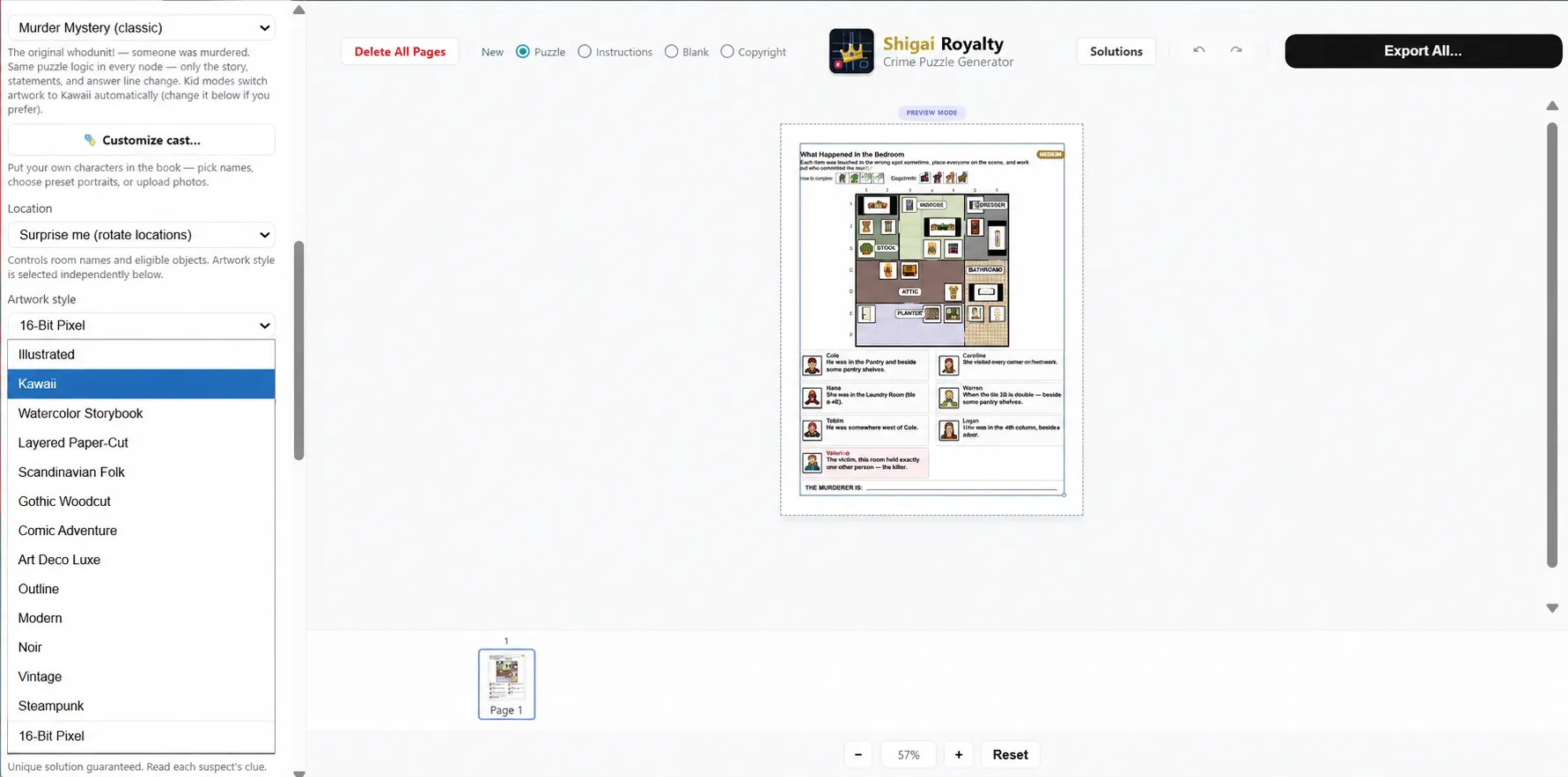
Screenshot captured during my test on July 25, 2026 · nhanscope.com
Let the engine build and verify the case
This is the step that actually matters. The software constructs the clue chain mathematically, then runs a verification pass to confirm there is exactly one solution reachable through pure deduction — no guessing, no dead ends, no two-possible-killers situation that gets a book a one-star review. It also generates a hints ladder (so a stuck reader has a way forward without the answer being handed to them) and a full step-by-step solution walkthrough for the back of the book.
Lay out, export, and publish
The built-in page designer handles the parts that usually eat an entire weekend — margins, trim sizes, fonts, difficulty badges, legends. Bulk mode fills a whole book in a single pass instead of exporting page by page. When you're done, you get a print-ready PDF for KDP paperback upload, plus unlimited high-resolution PNGs you can repackage as an instant-download printable on Etsy-style marketplaces. Same asset, two income rails.
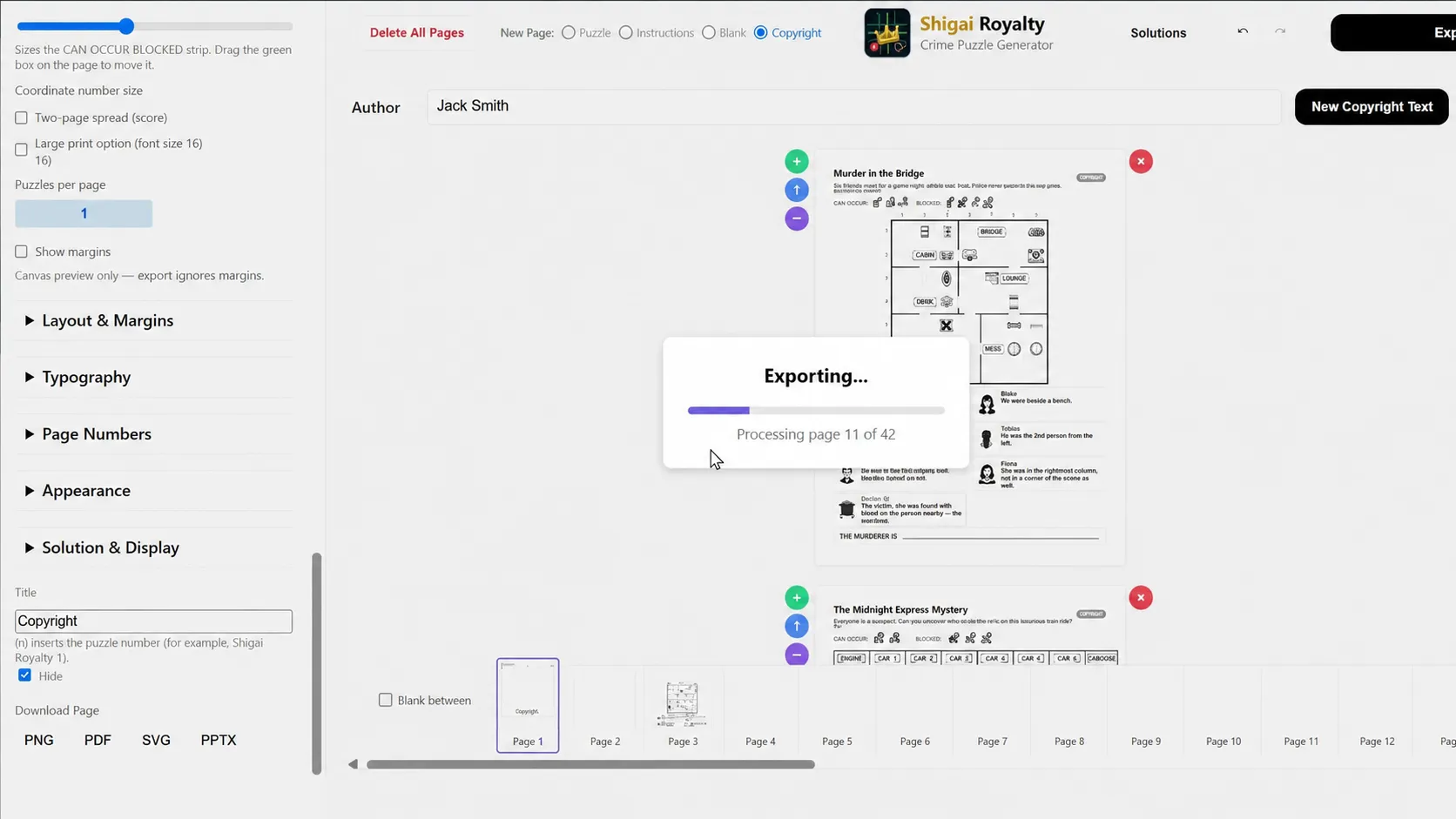
Screenshot captured during my test on July 25, 2026 · nhanscope.com
My honest read on the workflow: the part that would normally cost you a freelancer, a spreadsheet, and a long weekend of proofreading is compressed into three clicks and a short wait. That's the entire pitch of the software, and — unlike a lot of the tools I've tested — it's actually true.
Every Feature, Reviewed Individually
I don't like feature-dumps in reviews — a bullet list tells you nothing about whether a feature actually earns its place. So here's every core piece of Shigai Royalty, with my take on why it matters (or doesn't).
Verified Deduction Engine EXHIBIT A
The single most important line item on this whole list. Every puzzle is mathematically checked for a unique, logically-reachable solution before it's allowed into your book. This is the difference between "a puzzle book" and "a puzzle book that generates one-star reviews from buyers who hit an unsolvable page." Most low-content tools skip verification entirely because it's hard to build. This one doesn't.
Five Difficulties, Grids From 6×6 To 16×16 EXHIBIT B
This is what lets you build an actual catalog instead of one book. Easy 6×6 cases work for casual buyers and gift books; the 16×16 "Dragon" tier is built for the hardcore logic-puzzle crowd that already devours hard sudoku and hard cryptic books. Escalating difficulty across a series is a common KDP catalog tactic — some readers who finish book one do come back for book two, though that depends on listing quality and niche, not the software alone.
Custom Casts, Rooms & Photo Upload EXHIBIT C
This is the feature that turns one engine into an unlimited number of niches. Rename the rooms and recast the suspects and you can pivot from a classic manor-house mystery to an office caper, a cruise-ship mystery, a haunted hotel, or a fully personalized gift book built around a real family or friend group.
Hints Ladder + Step-By-Step Walkthroughs EXHIBIT D
An underrated review protection feature. A reader who gets stuck and has no way forward abandons the book and leaves a bad review. A graduated hint system keeps them solving instead of quitting — and a full solution walkthrough at the back closes the loop so nobody feels cheated.
How-To-Solve Tutorial Page EXHIBIT E
One click drops in a fully worked, small-scale example case solved line by line. This matters more than it sounds — this puzzle format is less familiar to casual buyers than sudoku, so a built-in onboarding page directly reduces first-page confusion and refund requests.
Full KDP Page Designer + Bulk Mode EXHIBIT F
Margins, trims, fonts, difficulty badges, and legends, all handled for you, with a bulk-generation mode that fills an entire book in one pass instead of page-by-page exporting. This is the unglamorous feature that actually determines whether you publish one book or twelve.
Flexible Exports: PDF + Unlimited PNG EXHIBIT G
Print-ready PDF for KDP paperback, plus unlimited high-resolution PNG exports for printable marketplaces. Two selling channels from one build. This is the detail that makes the front-end price genuinely reasonable relative to what it replaces.
What Current Members Are Reporting
I want to be careful here, because this is exactly the section where most reviews get sloppy. Income screenshots are easy to fake, hard to verify, and — even when they're real — they're never typical. I'm including a few below because the vendor shared them with reviewers, but treat them the way you should treat any income proof on the internet: as evidence that it's possible, not a promise of what will happen for you.

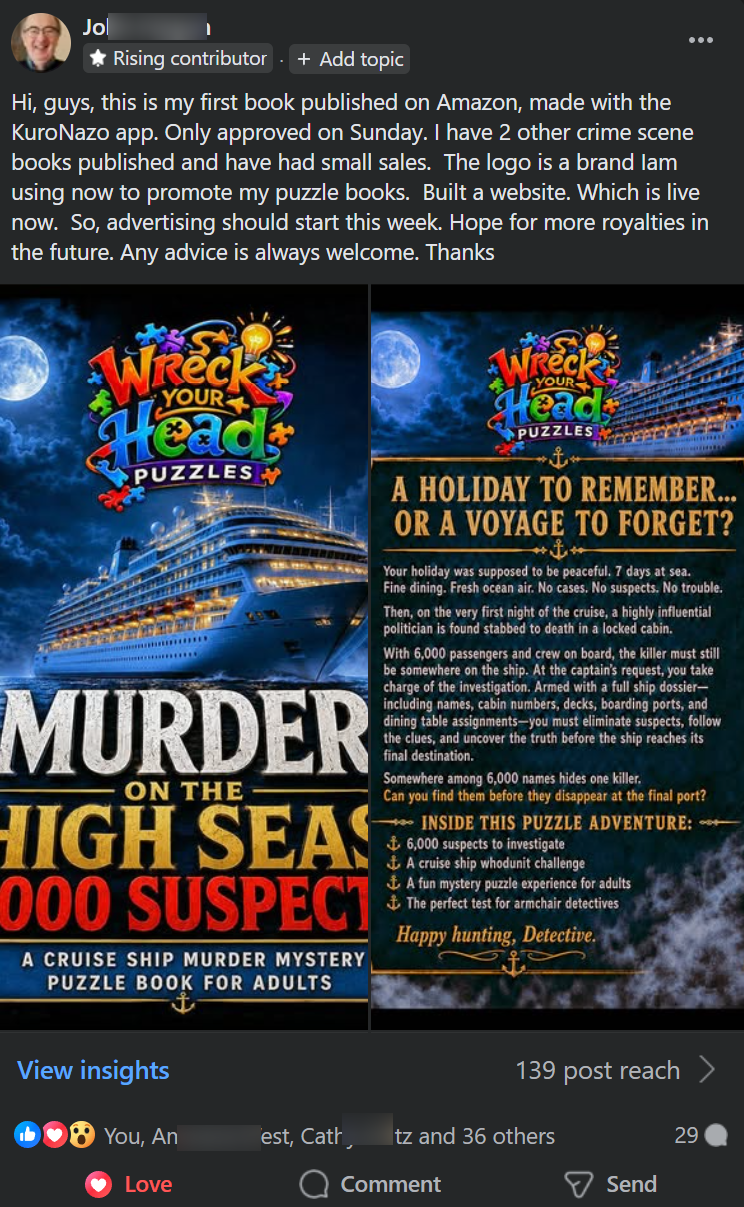
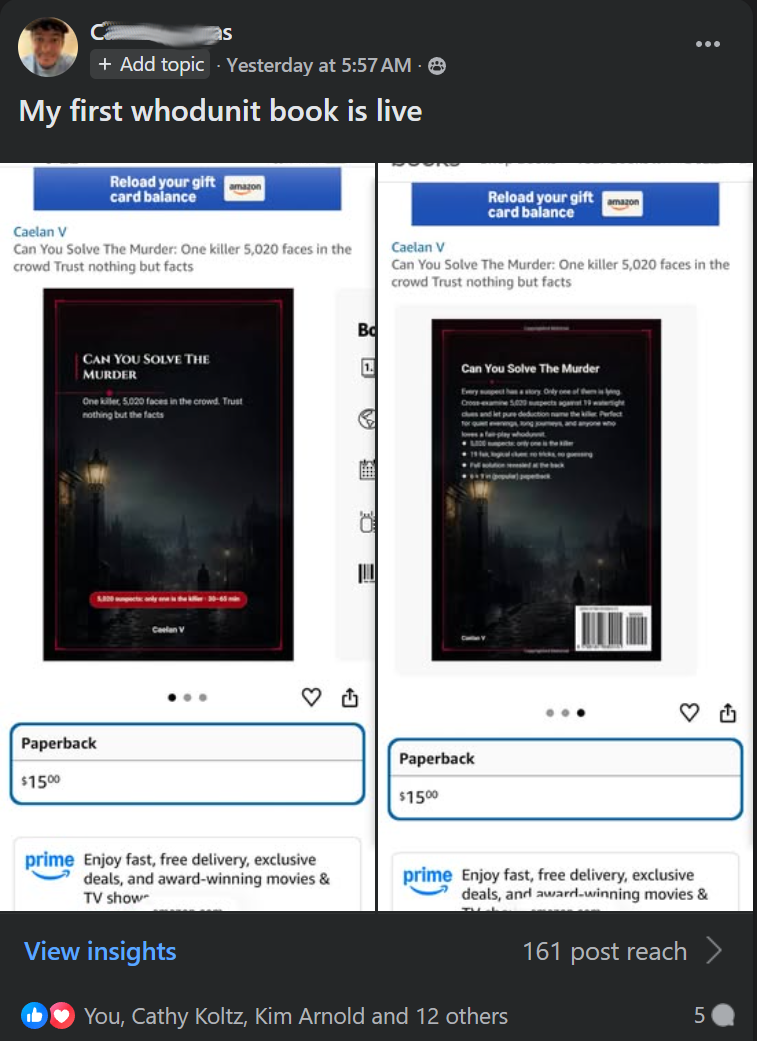
What I'll say plainly: results depend entirely on your own effort, your niche selection, your cover and listing quality, and Amazon's ever-shifting algorithm. Nobody — including me — can promise you a number. What I can vouch for, from actually using the software, is that the puzzles it produces are solvable, verified for a single solution in my tests, and different in format from the saturated word-search and sudoku categories most new KDP publishers compete in.
Six Ways I'd Actually Use This Software
💀 Classic Murder Volumes
The flagship play: cozy 6×6 "find the killer" books through monster 16×16 finales for the hardcore logic crowd.
💎 Heist & Thief Hunts
Same addictive mechanic, softer framing — "find the thief" books that work well for a slightly younger or gift-oriented audience.
🎁 Personalized Gift Books
Upload photos, cast real friends or family as the suspects, and print a one-of-a-kind mystery. This is a genuinely strong Etsy-style printable angle.
📈 Difficulty-Ladder Series
Book one easy, book five brutal. Series buyers who finish one volume often look for the next — a familiar KDP catalog tactic, not a guaranteed retention engine.
🖨 Etsy & Printable Packs
The exact same PNG exports work as instant-download printables — party packs, game nights, classroom brain teasers.
🏢 Themed Custom Worlds
Rename rooms and recast suspects for office mysteries, cruise-ship capers, or haunted hotels — effectively unlimited sub-niches from one engine.
Is Shigai Royalty Legit or a Scam?
Short answer: the software is legitimate and works as a puzzle-book creation tool. It is not a scam in the “fake product / disappear with your money” sense — and it is also not a guaranteed income system. Those are different claims, and they get mixed up in a lot of affiliate reviews.
Here’s what I personally checked versus what comes from the vendor:
- Software exists and runs: I logged into the cloud app, created cases, ran the verification flow, used the page designer, and exported files. The tool itself is real and usable — that is not the same as a promise of income.
- What I verified in testing: puzzle generation, single-solution verification behavior in my sample boards, layout/export workflow, and that the $19 front end already covers the core publishing path.
- Vendor / launch claims: income screenshots, member testimonials, and “opportunity” marketing language are supplied by the vendor or prior members. I did not independently audit those earnings.
- No income guarantee: nothing in my testing supports a promise of royalties, ranking, or sales. Results depend on publishing effort, covers, keywords, and Amazon’s algorithm.
- No refund: this offer is sold as final sale. Buy knowing you cannot treat checkout as a free trial.
- Payment rail: checkout runs through WarriorPlus (a common marketplace for digital products), not a mystery payment page.
If someone is selling “press a button and get rich,” walk away. If someone is selling a specialized puzzle engine you still have to publish with — that matches what I saw.
What It Actually Costs (And What I'd Skip)
Like most software launched through this kind of funnel, Shigai Royalty is a front-end-plus-upgrades structure. I'd rather be straight with you about what each tier does than pretend you need all of them, because you don't.
| Tier | What it adds | Typical price |
|---|---|---|
| Shigai Royalty (Front End) | Full deduction engine, all 5 difficulties, 6×6–16×16 grids, custom casts & rooms, Murder + Heist modes, hints/walkthroughs, page designer, bulk export | $19 |
| PRO Upgrade | New puzzle variants, kid & family modes, premium page design, Floor Studio, unlimited exports | $57 |
| ELITE Upgrade | Premium variants, conditional/cipher clues, seasonal modes, World Builder, one-click Story Book wizard, large print/pocket editions | $187 |
| Genten Royalty (companion) | A separate math-mystery studio — whodunits solved with math, aimed at teachers/parents/grades 1–6 | $47 |
My honest recommendation: the $19 front end is the whole engine — the verification system, both game modes, all difficulties and grid sizes, and full export rights are already in it. That alone includes the core tools needed to create and export books for publication. I'd start there, publish two or three books, and only look at PRO if you specifically want the kid/family variants or the personalized-gift angle at scale. ELITE is aimed at publishers who are already building a serious catalog and want premium editions (large print, pocket, seasonal) — skip it on day one.
What I Like — And What Gives Me Pause
What I like
- The verification system worked across the settings and sample boards I tested; I did not encounter a broken or ambiguous puzzle
- In my July 2026 Amazon checks, comparable narrative logic-grid titles looked less crowded than sudoku or word search — not proof of demand
- The page designer and bulk export genuinely save hours per book
- Custom casts and photo upload open a legitimate personalized-gift product line
- Cloud-based — nothing to install, works on the browser you already have open
- Two export formats (PDF + PNG) means two sales channels from one build
What gives me pause
- This is still a funnel with real upgrade pressure — the front end is genuinely usable, but expect upsell screens
- All sales are final on this offer — there's no refund window, so go in knowing that
- It's a newer puzzle format for buyers; your book description and "how to solve" preview matter more than usual
- Lower visible competition today can change quickly once more publishers enter the niche
- You still have to do the publishing work: covers, keywords, categories, and listing optimization aren't included
Who Should (And Shouldn't) Buy This
Good fit if you're...
- Already publishing low-content books and tired of oversaturated categories
- Willing to publish more than one book — this rewards catalog-builders, not one-and-done buyers
- Interested in a second income rail through printables, not just KDP
- Comfortable following simple software steps without hand-holding
Skip it if you're...
- Looking for a guaranteed, done-for-you income button — this still requires publishing effort
- Not willing to invest even a small amount of time learning the dashboard
- Expecting a refund safety net — remember, this offer is final-sale
- Already happy competing head-on in the most saturated KDP categories
Five Premium Bonuses Exclusive From Me
Buy through my link and you'll get these five bonuses instantly after purchase — free, on top of whatever the vendor includes at checkout. Combined bonus value: $525.
Bonus #1: The Mystery Puzzle Profit Launch Blueprint
Value: $97Format: Step-by-Step Guide and Launch Checklist
What it is: A complete 14-day action plan for taking a Shigai Royalty puzzle book from initial concept to a published Amazon KDP listing. It includes daily tasks for niche selection, book creation, quality checks, listing preparation, pricing, and launch promotion.
Why it converts: The core product builds the puzzles, but new users may still feel uncertain about what to do first. This blueprint removes confusion and gives them a clear path to publishing their first market-ready book quickly.
Bonus #2: 101 High-Demand Mystery Book Themes
Value: $67Format: Niche Idea Vault and Theme Guide
What it is: A curated collection of 101 mystery, heist, detective, workplace, holiday, travel, family, and gift-book concepts that users can create with custom suspects and rooms. Each idea includes a suggested audience, title angle, visual direction, and potential series expansion.
Why it converts: Buyers may understand how the software works but still struggle to choose a profitable concept. This bonus eliminates blank-page syndrome and helps them create differentiated books instead of publishing generic murder-mystery titles.
Bonus #3: The KDP Mystery Listing Conversion Kit
Value: $147Format: Copywriting Templates and Keyword Workbook
What it is: A collection of fill-in-the-blank templates for book titles, subtitles, product descriptions, backend keyword research, author bios, and promotional copy. It also includes positioning formulas for easy, intermediate, advanced, family-friendly, gift, and themed puzzle books.
Why it converts: Creating a strong puzzle book is only half the job; the Amazon listing must persuade shoppers to buy it. This kit helps users communicate the book's value clearly and avoid weak, generic listings that receive impressions but few sales.
Bonus #4: The Five-Book Mystery Series Builder
Value: $127Format: Series Planning Workbook and Publishing Roadmap
What it is: A practical workbook for turning one puzzle-book idea into a coordinated five-volume series with escalating difficulty, recurring themes, consistent branding, and cross-promotion between books. It includes planning tables for titles, covers, difficulty levels, puzzle counts, release dates, and reader progression.
Why it converts: A single book may produce occasional sales, but a connected series can increase repeat purchases and strengthen the publisher's catalog. This bonus helps buyers think beyond one launch and build a scalable royalty asset.
Bonus #5: The Puzzle Book Quality-Control and Review Protection System
Value: $87Format: Audit Checklist, Testing Protocol, and Review-Safety Guide
What it is: A comprehensive pre-publication inspection system covering page order, puzzle instructions, solution matching, trim size, margins, image resolution, difficulty consistency, copyright pages, and buyer usability. It also includes a reader-testing process and a negative-review prevention checklist.
Why it converts: Although the software verifies each puzzle's logic, publishing errors can still happen during book assembly, exporting, or uploading. This bonus protects the buyer's reputation by helping them catch production mistakes before customers do.
You'll receive all five bonuses instantly after purchasing through my link.
Straight Answers To The Questions You'd Actually Ask
Do I need any writing or puzzle-design experience?
Is every puzzle really guaranteed solvable?
Is this cloud software, or do I need to install anything?
Do I actually own what I create?
Where can I actually sell these books?
How long does it take to build a first book?
Are there monthly fees?
Is there a money-back guarantee?
My Final Take
Recommended — with a clear-eyed sense of what it is
A verified, format-different puzzle mechanic, sold through a fairly standard front-end-plus-upgrades funnel. The front end alone is worth the $19 for anyone already publishing low-content books. I'd skip the higher upgrades until you've actually shipped a book or two.
Here's where I've landed after actually building test cases inside the software instead of just watching the sales video: the marketing around "empty shelf" niches is, as always, marketing — no niche stays empty forever, and nobody can promise you a number. But underneath the launch-page language is a solid piece of engineering: a verification system that did what it claimed in my tests, wrapped around a puzzle format that most KDP publishers simply aren't set up to build by hand.
That combination — a real technical barrier plus lower visible Amazon competition in my July 2026 spot-checks — is rarer than the average KDP software launch, and it's the reason I'm putting my name on this review instead of quietly ignoring another pitch email. Lower competition is not the same as proven demand.
If you're already publishing low-content books and you're tired of fighting for scraps in word search and sudoku, the front end is a low-risk way to test a different shelf. If you're brand new to KDP entirely, this can still work, but budget real time to learn basic KDP publishing (categories, keywords, covers) alongside it — the software builds the book; it doesn't run your publishing business for you.