One Book Is A Project.
Eight Books Need A Production System — Especially If Your Clue Logic Has To Stay Consistent.
The Clue Logic Automation Suite for Fiction Puzzle Books gives you a reusable planning system — custom GPT workflow, spreadsheet trackers, and batch prompts — to help plan multiple fictional mystery puzzle books with clearer clue logic, fewer repeated plot patterns, and more consistent solution paths.
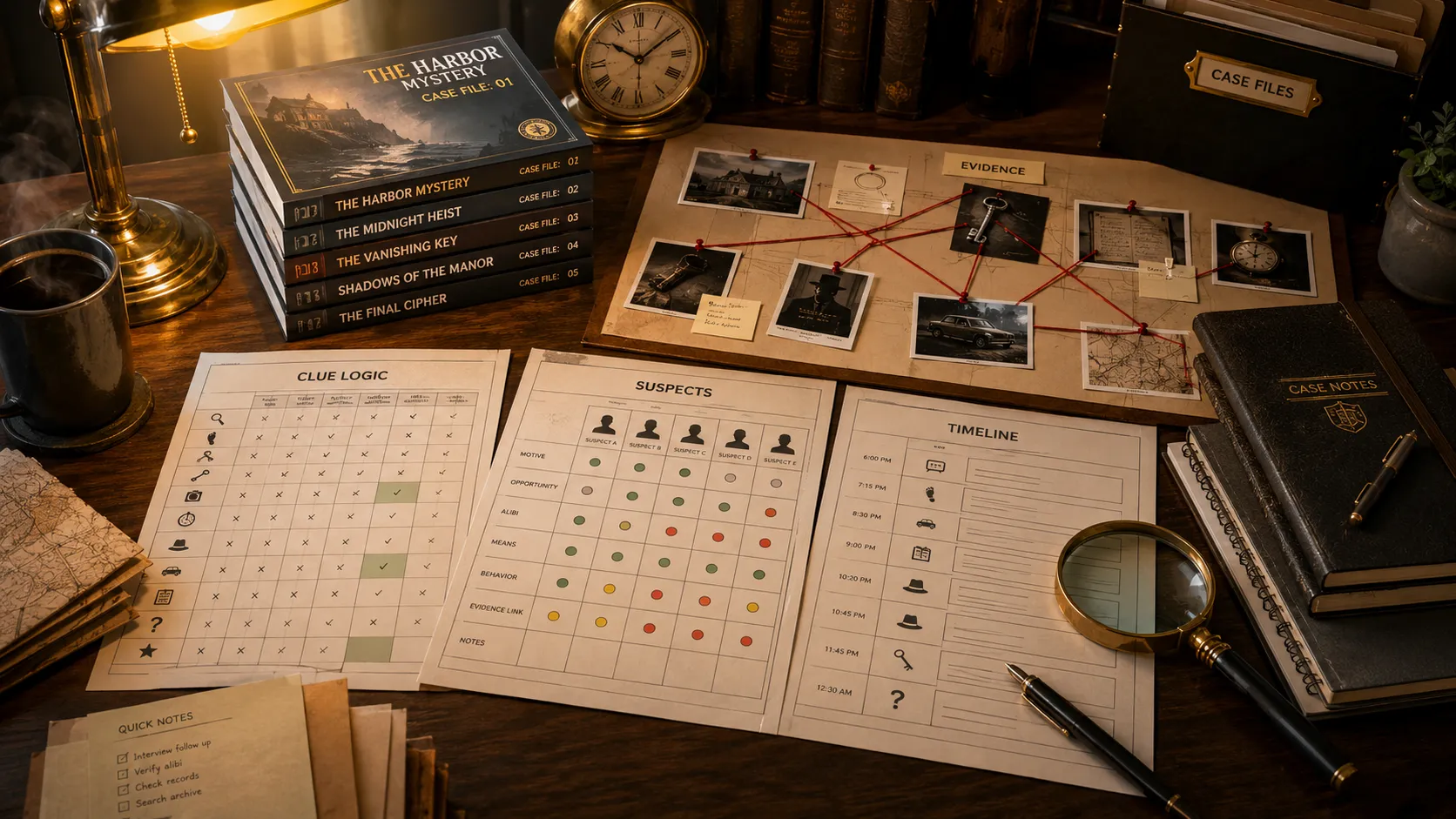
Skip this and every new book starts from scratch — same suspects, same twists, same logic holes.
Here's what happens to almost every KDP puzzle-book creator once they finish book one:
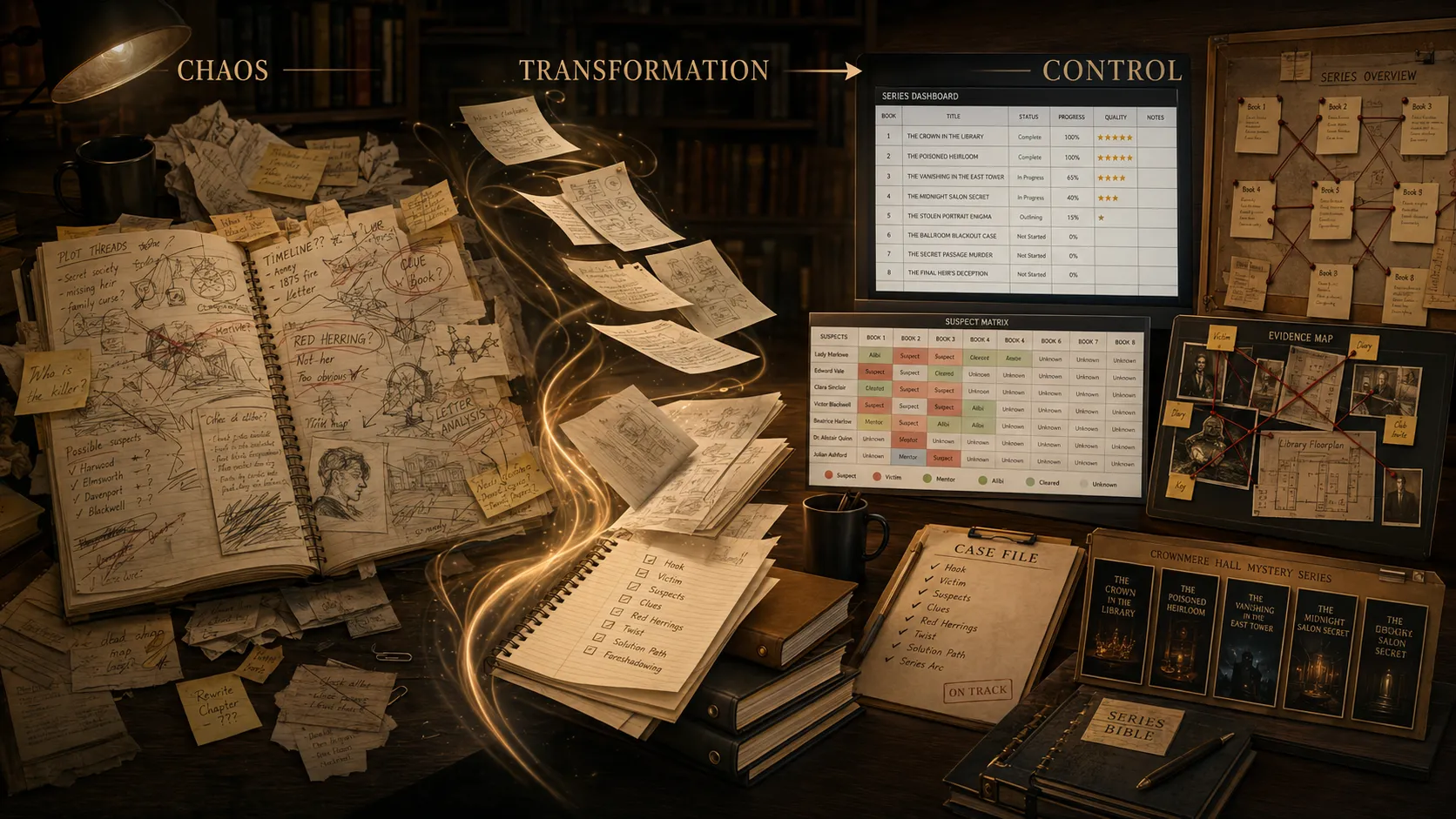
Book one felt great. You mapped the suspects. You placed the clues. The answer made sense. Then book two arrived — and suddenly you're juggling sticky notes, half-finished spreadsheets, and a nagging fear that Edmund Vale from book one is basically the same character as the estate adviser in book four.
That's not writer's block. That's what happens when you scale a mystery series without a production system. Clues drift. Red herrings repeat. Difficulty swings wildly. And the locked-room trick you used in book one shows up again in book six because nobody tracked what already got used.
"Readers forgive one clever puzzle. They don't forgive a series that keeps breaking its own rules."
The front-end gave you the series roadmap. The expansion pack gave you the interior structure. What you still don't have is the operating system that keeps clue logic, suspect roles, and solution paths consistent across every title in your series — and lets you batch-plan the next five books in one sitting instead of five separate panic sessions.
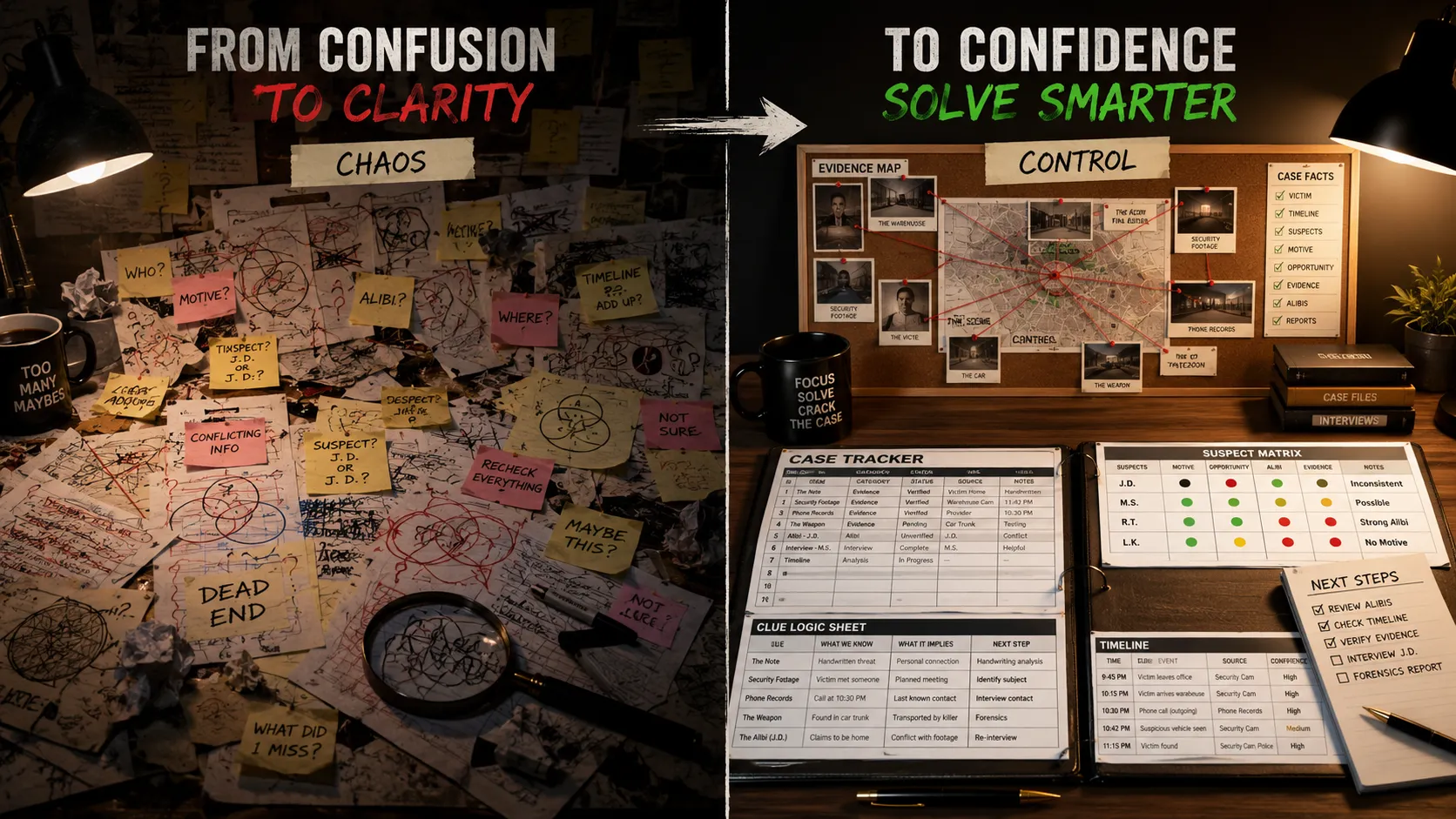
Paste Your Series Plan. Get A Scalable Clue-Logic Factory.
Paste a book title, suspect list, rough premise, or your full series output. The Automation Suite GPT organizes it into a working production dashboard — then shows you how to scale it across an entire series without repeating the same locked-room pattern or hidden-object ending.
From one concept like The Crown in the Locked Library, here's what the system builds:
Clue tracker: 10 clues with type, reveal stage, fairness score, and connected suspect IDs
Solution path: Fictional character Edmund Vale staged the crown inside a hollow book display — crown never left the locked library
Series expansion: 8-book batch plan with rotating mechanics, fictional culprit roles, and difficulty calibration
Crownmere Hall Mysteries — Books 1 Through 8
Each book gets a distinct puzzle mechanic, fictional culprit role, and twist — flagged before you write a single interior page.
| Book | Title | Mechanic | Core Twist |
|---|---|---|---|
| B01 | The Crown in the Locked Library | Locked-room deduction | Crown hidden in hollow book display |
| B02 | The Scepter in the Silent Gallery | Visual misdirection | Scepter disguised as part of a frame |
| B03 | The Ruby Seal at Midnight | Document contradiction | Real seal used before supposed theft |
| B04 | The Tiara Behind the Veil | Costume swap | Tiara worn in plain sight under a veil |
| B05 | The Chalice in the Winter Vault | Inventory logic | "Missing" chalice identifies drawer swap |
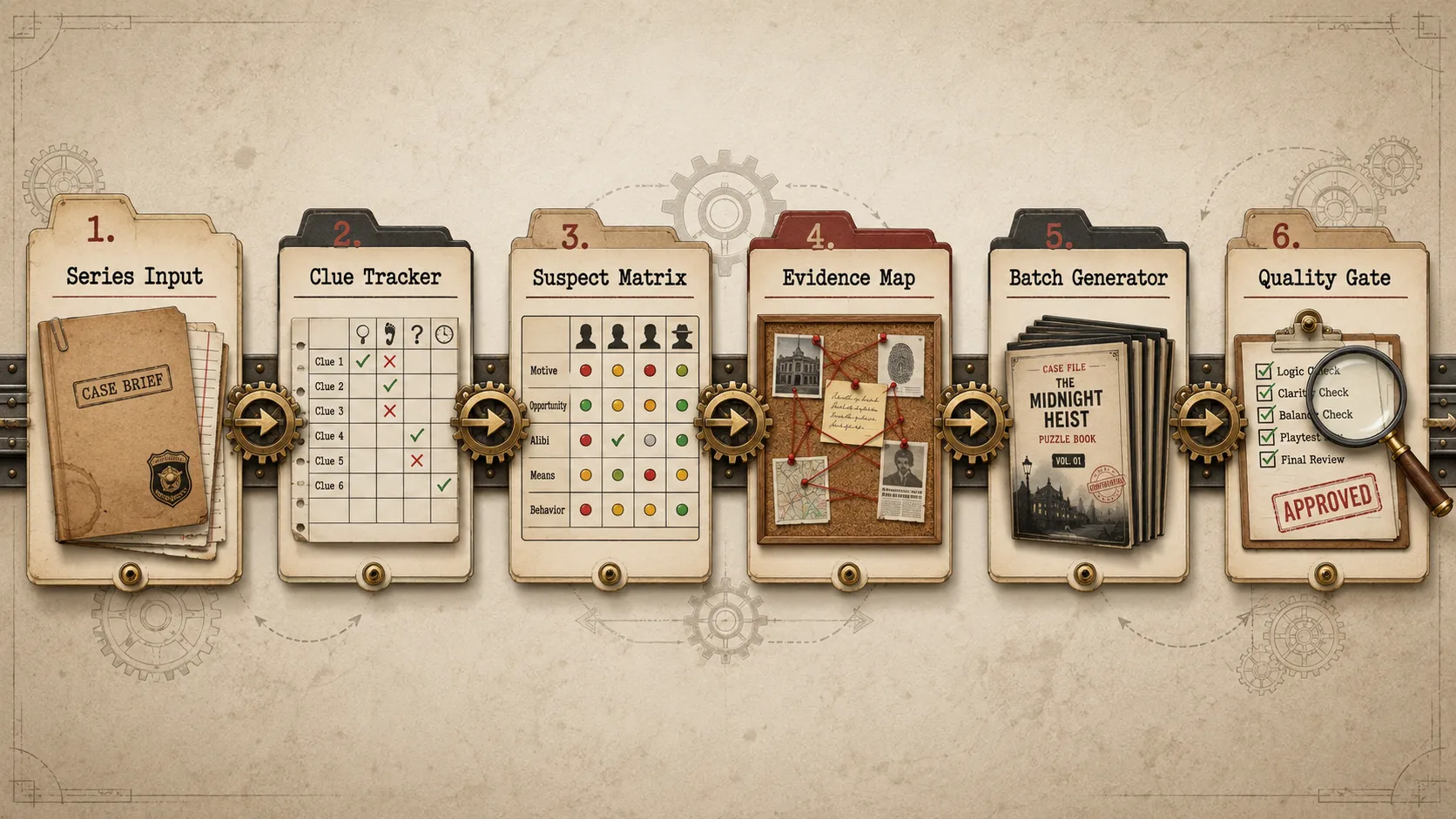
Your Repeatable Puzzle-Book Production System
Clue Logic Tracker Spreadsheet
Every clue tagged by type, reveal stage, fairness score, and connected suspect — copy-ready columns you reuse book after book.
Suspect Role Matrix
Motive, alibi, secret, suspicion level, fictional culprit flag, and red herring flag — so no two books accidentally share the same cast pattern.
Evidence-to-Solution Mapping Worksheet
True evidence, misleading evidence, alibi breaks, and final solution path — mapped before you format a single page.
Batch Title + Premise Generators
Spin up multiple book concepts under one series brand without repeating settings, mechanics, or fictional culprit types.
Difficulty Calibration Workflow
Score clue clarity, suspect complexity, red herring strength, and solution fairness — with fix recommendations built in.
Continuity + Series Audit Prompts
Flag repeated locked-room tricks, recycled motives, and setting overload before they reach your readers.
KDP Listing Batch Builder
Hooks, keyword ideas, back-cover angles, and reader promises — generated in batch for every title in the series.
Quality-Control Checklist
Final production gate: spreadsheet ready, fictional culprit rotation checked, red herrings explained, difficulty balanced — pass or fix before you finalize your book.
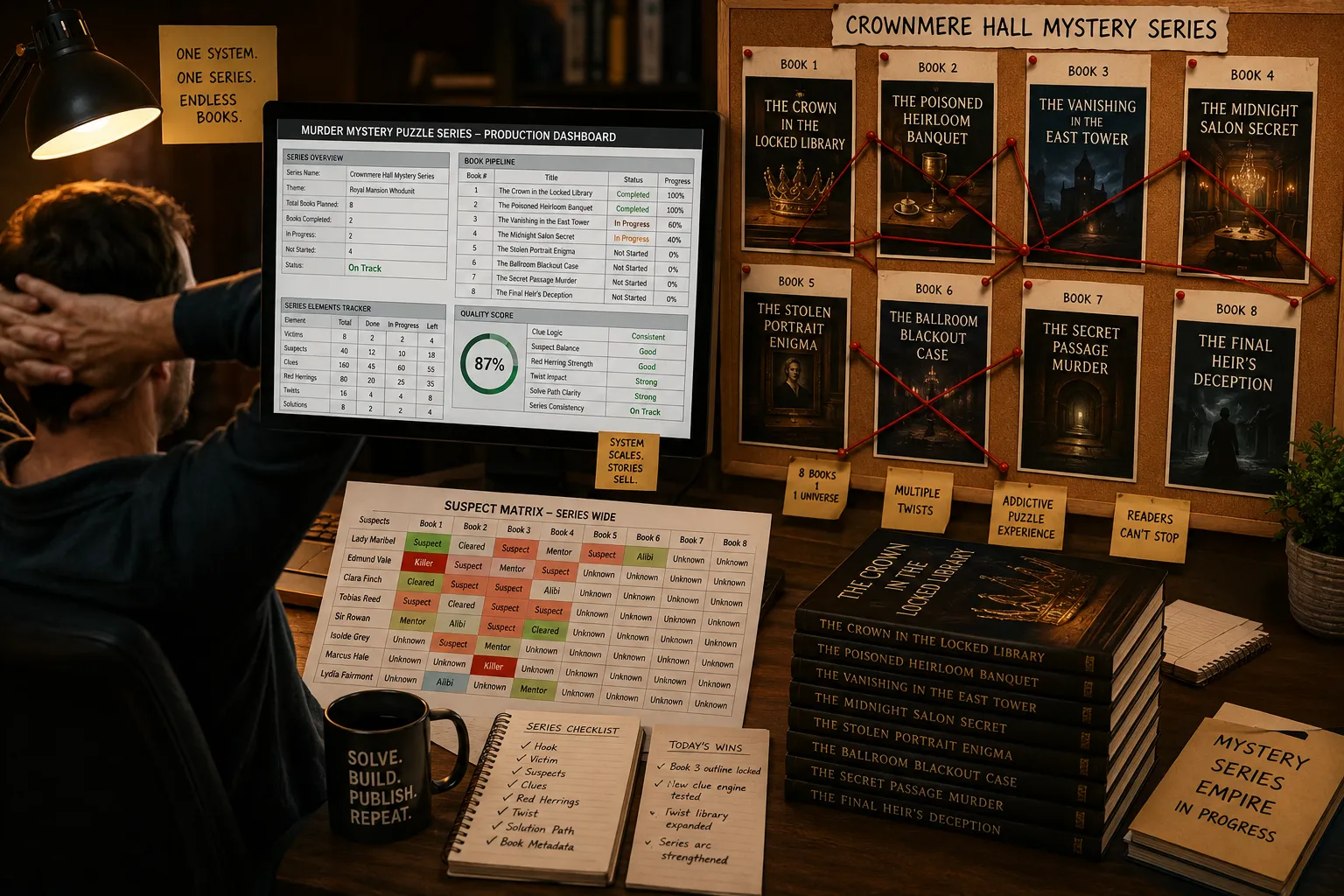
You Built The Books.
Now Build The System Behind Them.
Without the Automation Suite:
- Every new book starts with blank clue notes and guesswork
- Suspects, motives, and twists repeat across the series
- No way to audit fairness before readers find the holes
- Listing copy written one book at a time, from scratch
With the Automation Suite:
- One paste → full clue tracker, suspect matrix, and solution map
- Batch-generate titles and premises with rotation rules built in
- Continuity audits catch repetition before you finalize each book
- Repeatable workflow for book 1, book 5, and book 20
Paste Your Series Or Book Idea
A title, suspect list, clue notes, or one rough premise. Example: "Build a clue-logic system for Book 1: The Crown in the Locked Library, then scale to Crownmere Hall Mysteries."
Run The Automation Workflow
The GPT builds your tracker, matrix, evidence map, red herring map, difficulty score, and batch expansion plan — with spreadsheet-ready output.
Ship Every Book With Logic You Can Explain
Hand the system to your interior builder, designer, or formatter. Every book starts from the same production line — not a fresh panic every time.
Add The Clue Logic Automation Suite for Fiction Puzzle Books
Custom GPT workflow + spreadsheet trackers + batch generation prompts. The production system that keeps your fictional mystery puzzle series consistent, scalable, and built for batch series planning.
One-time payment · Special upgrade price shown on this checkout page.
Value estimates shown for illustration only. Actual value depends on your use.
Refund
Policy
Run It On One Book. Keep It Only If The Logic Holds Up.
Paste one title from your series. Run the automation workflow. If, within 30 days of purchase, you don't walk away with a structured clue-logic system you could reuse across multiple books — email us at nhanscope@gmail.com and we'll process a full refund of this $67 upgrade. No complicated process. Just email us within 30 days.
Titles Are Easy.
Consistent Logic Across A Series Is Not.
You already have the roadmap. You already have the interior structure. One major thing standing between a one-book experiment and a more cohesive puzzle-book catalog is the system that helps keep clues, suspects, and solution paths aligned — book after book, batch after batch.
This special checkout upgrade price is currently available on this page and may change after this session.
P.S. — Book one proves you can do this. Books two through ten turn a single experiment into a serious publishing workflow. The Automation Suite is what separates a folder of good ideas from a repeatable planning workflow you can reuse each month.
P.P.S. — At $67, one well-planned series is designed to help you organize your workflow with fair clues, rotated fictional culprits, and batch-ready listing drafts. The only question left: add the system now, or keep rebuilding logic from scratch every single time.