You Have The Series Roadmap.
Now Turn Each Title Into A Book Interior Blueprint.
The Mystery Puzzle Book Builder Expansion Pack — a fictional whodunit puzzle system — takes any mystery concept from your series blueprint and expands it into a 60–75 page detective puzzle book production plan — page sequence, character statement pages, evidence logs, deduction worksheets, red herrings, twist options, and answer key logic.
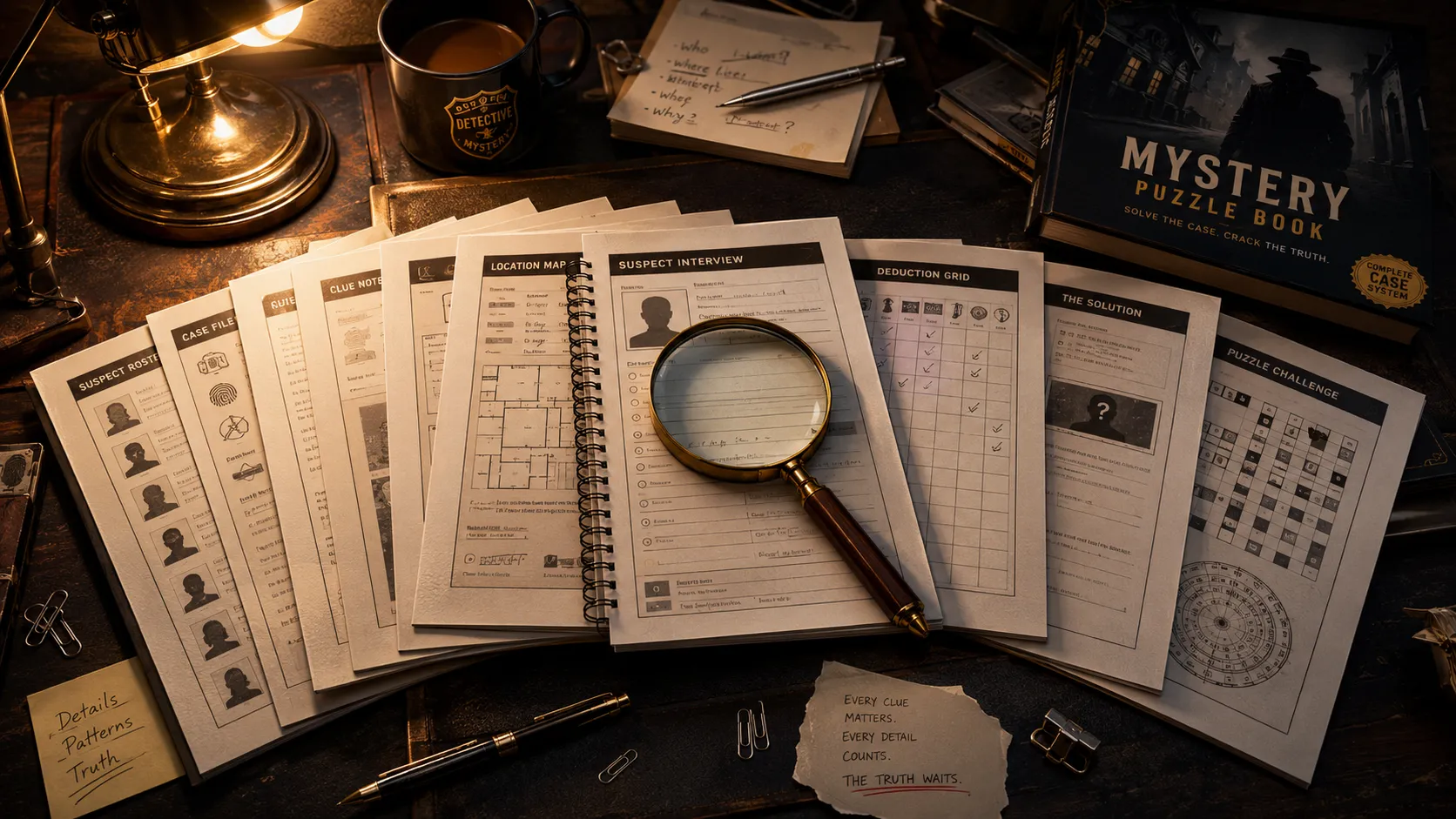
Skip this page and you'll still have ten great titles… and ten blank interiors staring back at you.
Congratulations. You just unlocked something most self-publishing puzzle creators never get: a complete 10-book series roadmap with titles, fictional characters, clue logic, and listing angles.
But here's what nobody warns you about on the way out the door:
A series blueprint is not a book. A title is not an interior. And "I'll figure out the pages later" is exactly how good ideas go to die in a folder labeled someday.
"Ten titles without interiors is a plan. One finished book interior is a product."
The front-end tool gave you the map. Book 1 might be The Crown in the Locked Library — locked room, missing crown, five puzzle characters, fair-play twist. Perfect premise. But what comes next?
- Which pages go first — case file, fictional case scene, or character profiles?
- How many interview pages before the reader gets overwhelmed?
- Where do red herrings land so they're tempting but fair?
- What worksheets actually guide a reader to the solution?
- How do you scale difficulty without rebuilding from scratch?
That's not a creative block. That's a structure problem. And structure is exactly what this expansion pack solves — before you open Canva, before you hire a formatter, before you lose another weekend to blank pages.
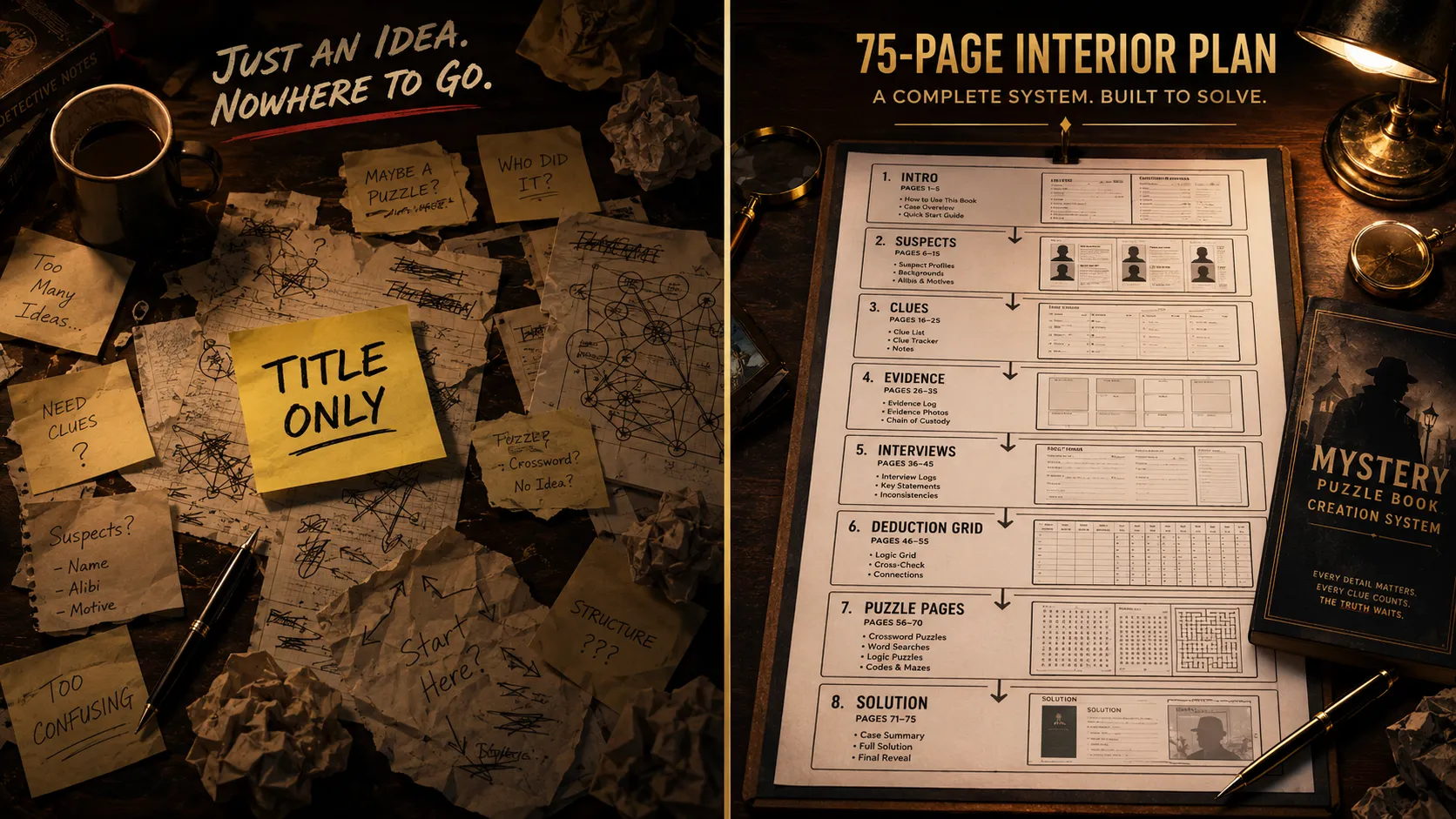
Paste a title. Get a Volume 1 interior blueprint.
Paste your book title, a short premise, one volume from your roadmap, or your full front-end output. The Expansion Pack GPT builds the interior — not vague suggestions, but a page-by-page production blueprint.
From a single concept like The Crown in the Locked Library, here's what lands in your hands:
Solution logic: Edmund Vale · crown hidden in hollow book display · fair-play red herrings for Lady Maribel, Tobias, Clara, and Sir Rowan
Reader promise: "The answer was never hidden behind the locked door. It was hidden beside the books."
Page-By-Page Book Flow
Book 1: The Crown in the Locked Library · 75-page interior blueprint
Opening Case File
- Page 1 Title page
- Page 2 Case introduction: “The Crownmere Crown was displayed for one private dinner only.”
- Page 3 Lord Aldren profile: estate trustee, keeper of artifact access
- Page 4 The locked-room mystery summary
- Page 5 Reader mission: determine who staged the crown disappearance and how
Reader Instructions
- Page 6 How to use the case file
- Page 7 Symbols: true clue, suspicious detail, contradiction, red herring
- Page 8 Locked-room solving tips
- Page 9 Reader notes page
Fictional Case Scene Section
- Page 10 Crownmere Hall library overview
- Page 11 Locked door report
- Page 12 Window and fireplace notes
- Page 13 Crown display case description
- Page 14 Hollow book display detail
- Page 15 Library floor map
- Page 16 Object placement puzzle
- Page 17 First evidence log
- Page 18 Initial theory worksheet
Character Profiles
- Pages 19–20 Lady Maribel
- Pages 21–22 Edmund Vale
- Pages 23–24 Clara Finch
- Pages 25–26 Tobias Reed
- Pages 27–28 Sir Rowan
- Page 29 Character comparison chart
Character Statement Pages
- Pages 30–31 Lady Maribel — character statements
- Pages 32–33 Edmund Vale — character statements
- Pages 34–35 Clara Finch — character statements
- Pages 36–37 Tobias Reed — character statements
- Pages 38–39 Sir Rowan — character statements
- Pages 40–41 Interview contradiction worksheet
Evidence, Witnesses, and Clues
- Page 42 Key inventory page
- Page 43 Library lock inspection
- Page 44 Servant witness statement
- Page 45 Dinner guest timeline
- Page 46 The hollow book clue
- Page 47 The dust line clue
- Page 48 Edmund’s gloves clue
- Page 49 False crown theft theory
- Page 50 Red herring chart
- Page 51 Timeline reconstruction
- Page 52 Means, motive, opportunity grid
Reader Deduction Section
- Page 53 Alibi tracker
- Page 54 Motive ranking page
- Page 55 Hidden object logic page
- Page 56 Locked-room method worksheet
- Page 57 Clue chain builder
- Page 58 Character elimination page
- Page 59 Final three characters
- Page 60 Solution logic test
- Page 61 Reader's final deduction page
- Page 62 Confidence rating page
- Page 63 “Seal Your Answer” page
Answer Key and Bonus Section
- Pages 64–67 Answer key and solution reveal
- Pages 68–69 Innocent character explanations
- Page 70 Red herrings explained
- Page 71 Fair-play proof checklist
- Page 72 Bonus locked-room challenge
- Page 73 Alternate difficulty challenge
- Page 74 Sequel hook
- Page 75 Creator notes or reader completion page
That's the difference between knowing your book exists and having a usable interior structure you can actually build from — much sooner than starting from blank pages.
The Fast-Track From Concept To Book-Ready Structure
25 Fictional Mystery Puzzle Page Templates
Case brief, character profile, locked-room observation, character statement page, alibi tracker, evidence log, contradiction finder, reader's final deduction page, solution reveal, and more — repeatable for every volume.
Chapter & Page Sequence Templates
A proven 60–75 page flow from opening case file through deduction climax to solution reveal — so you never guess what page 34 should be.
Red Herring Generator
Builds misleading character angles that look suspicious without breaking fair-play logic — mapped to where each herring appears and how it's explained.
Character Statement Prompt Builder
Structured statement pages with testable claims, contradictions, and story tone — ready to turn into reader-facing copy for your fictional whodunit puzzle.
Evidence Log + Deduction Worksheets
Printable-style trackers for clues, timelines, motive ranking, hidden objects, and character elimination — the pages readers actually use to solve the fictional case.
Difficulty Variations + Twist Endings
Easy through Expert versions of the same mystery, plus twist options (replica crown, deliberate story clue, series sequel hooks) without rebuilding the core logic.
Puzzle Intro/Outro Copy Templates
Opening hooks and dramatic reveal copy that match the puzzle tone — not generic filler.
"Create Volume 1" Guided Workflow
Step-by-step commands: confirm mystery → choose characters → build clue flow → arrange pages → write answer key → run fair-play quality check.
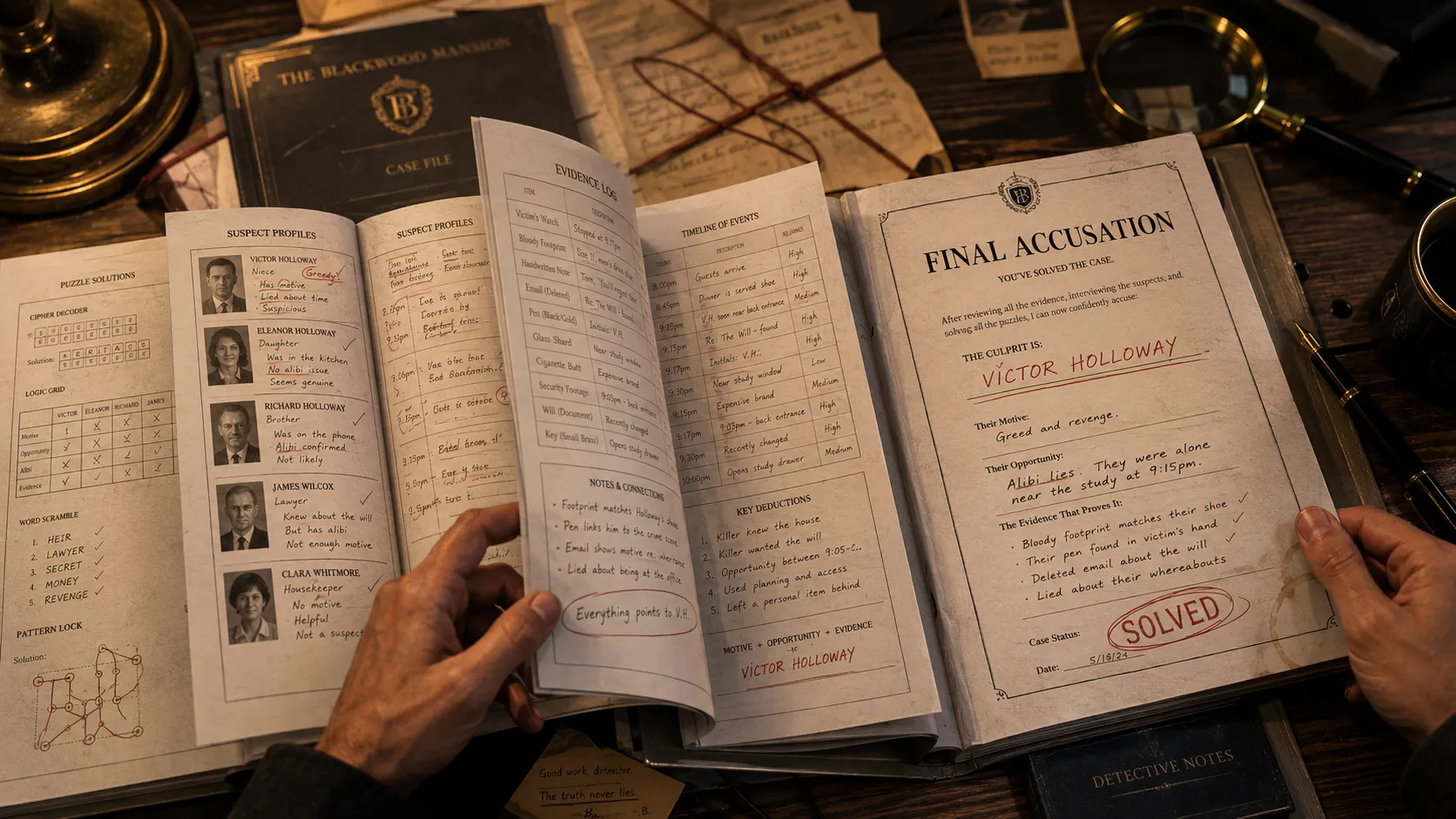
The Front-End Built Your Series.
This Builds Your First Book.
Without the Expansion Pack:
- Ten titles sitting in a doc with no interior plan
- Weeks guessing page order and worksheet layout
- Red herrings that either spoil the answer or feel random
- Interiors that read like notes, not puzzle books
With the Expansion Pack:
- Paste one title → get a full 60–75 page interior blueprint
- 25 reusable templates for every book in the series
- Fair-play clue flow, solution logic, and answer key mapped
- Move from series idea to structured interiors in one session
Paste Your Concept
A book title, premise, one roadmap volume, or your full front-end output. Example: "Expand Book 1: The Crown in the Locked Library into a full puzzle book structure."
Run The Interior Builder
The GPT maps characters, clues, red herrings, page sequence, worksheets, difficulty options, and solution reveal — in fair-play order.
Move Faster Toward Volume 1
Hand the blueprint to your designer, formatter, or your own layout tool. Create a usable structure for your first volume — then repeat for books 2 through 10 using the same template system.
Add The Mystery Puzzle Book Builder Expansion Pack
Advanced prompt pack + interior structure builder + expanded templates for fictional detective puzzle books. Takes each whodunit concept and expands it into a complete production plan you can start building from right away.
One-time payment. Special upgrade price shown after the main offer.
Refund
Policy
Try It On Book 1. Keep It Only If It Saves You Real Time.
Paste one title from your series. Run the interior builder. If, within 30 days of purchase, you don't walk away with a structured, usable puzzle book plan you could actually format — email us at nhanscope@gmail.com and we'll process a full refund of this $37 upgrade. No complicated process. Just email us within 30 days. Simple request, simple refund.
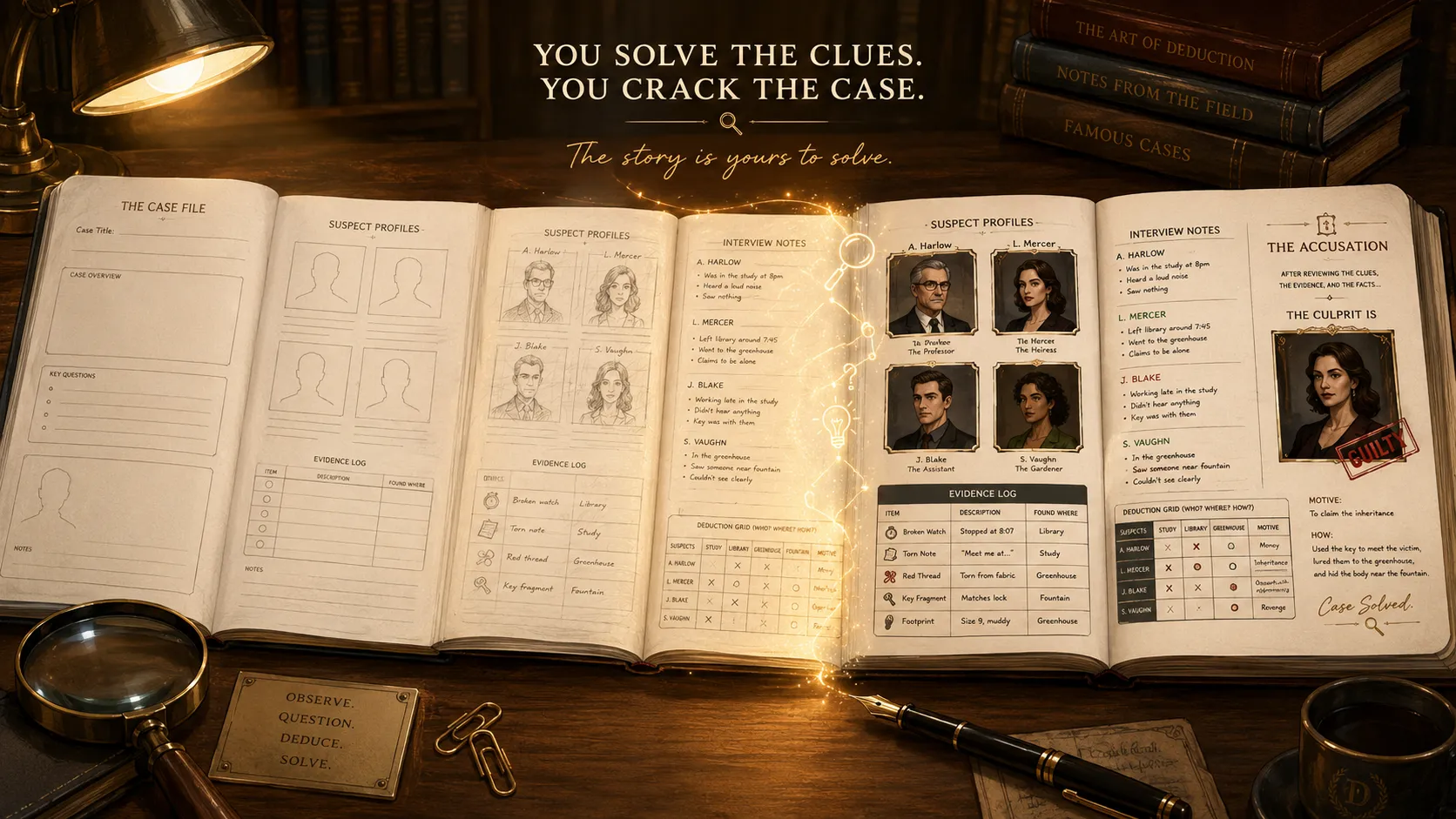
You Already Did The Hard Part.
Don't Stop At The Title Page.
You have the series. You have the cast of characters. You have the clue logic. The only thing between you and a published puzzle book is the interior structure — the pages readers flip through, mark up, and solve.
This expansion pack closes that gap in one session. Paste Book 1. Get 75 pages mapped. Reuse the same system for the other nine.
This upgrade is available on this page as a post-purchase offer.
P.S. — The front-end gave you ten books on paper. This gives you ten book interiors you can plan, structure, and build from. Many creators risk leaving great ideas unfinished when they never get past the title — don't let Book 1 stall in a folder labeled "eventually."
P.P.S. — At $37, one structured interior can make the upgrade feel worthwhile if it helps you save production time. The only real question is whether you want a usable Volume 1 structure now — or keep guessing page order from scratch.